

The science-backed guide explains why vitamin C good for the skin, how vitamin C works, why dermatologists recommend it, how to choose the right form for your skin type, and how to use it correctly for the best results.
Vitamin C is one of the most talked-about and researched skincare ingredients. You’ve probably heard it before: “Use vitamin C for glowing skin.” And maybe that’s why you’re here, asking yourself: “Is vitamin C actually good for your skin, or just another overhyped ingredient?”
The truth is, Vitamin C can be incredibly good for your skin. It can be one of the best additions to your routine. But only if you understand how to use it properly and which type your skin actually needs.

At Skin Alchemy, I combine my MPhil in Chemistry with evidence-based research to simplify the science behind skincare ingredients. Rather than following trends or marketing claims, you’ll learn how ingredients actually work, what the research says, and how to choose products that are right for your skin.
By the end of this post, you’ll have a clear, science-backed understanding of vitamin C. You’ll learn what vitamin C is, why researchers and dermatologists recommend it, and how to use it. So, you can finally see real results without wasting your time or money.
Key Takeaway
- Vitamin C brightens skin, fades dark spots, boosts collagen, and protects against aging.
- Not all vitamin C is equal. Pick the right form for your skin type (L-Ascorbic Acid for normal skin, gentler derivatives for sensitive or acne-prone skin).
- Stick to a 10–20% concentration and always follow with SPF in the morning.
- Results take 4–12 weeks. Consistency matters more than strength.
- What is Vitamin C?
- Topical Vitamin C vs. Dietary Vitamin C: Do You Need Both?
- Is Vitamin C Good for the Skin?
- Why Your Skin Needs Vitamin C?
- What are theBenefits of Vitamin C for Skin?
- How Vitamin C Works?
- Whar are Different Forms of Vitamin C?
- How to Choose the Right Vitamin C for Your Skin
- What Percentage of vitamin C to choose?
- What to Look for in a Vitamin C Product
- How to Use Vitamin C in Your Routine?
- When Will You See Results from Vitamin C?
- How to Tell if Your Vitamin C Has Oxidized?
- How to Store Vitamin C Serum Properly?
- Vitamin C Side Effects, Safety & Common Mistakes to Avoid
- Final takeaway:
- FAQs
- Read More
Let’s begin with understanding
What is Vitamin C?
Vitamin C, also known as ascorbic acid, is a water-soluble vitamin your body needs to function properly. It’s an essential nutrient, meaning your body cannot produce it on its own. You have to get it from external sources every single day.

Topical Vitamin C vs. Dietary Vitamin C: Do You Need Both?
Vitamin C supports healthy skin from both the outside and the inside, but topical skincare and dietary vitamin C don’t work in the same way. Rather than replacing each other, they complement each other to help keep your skin healthy.
Topical Vitamin C (Applied to the Skin)
Topical vitamin C is applied directly to your skin, where it increases vitamin C levels in the outer skin layers that are most exposed to UV rays and pollution. Because it works directly on the skin, topical vitamin C is particularly effective for improving concerns like dullness, pigmentation, and early signs of aging.
Topical vitamin C can help:
- Brighten dull skin
- Fade dark spots and post-acne marks
- Support collagen production
- Protect against free radicals and environmental damage
- Improve the appearance of fine lines and photoaging
Dietary Vitamin C (From Food or Supplements)
Unlike topical vitamin C, dietary vitamin C works from within your body. Since your body cannot produce vitamin C on its own, you need to get it regularly through foods or supplements.
Vitamin C from your diet supports many essential functions, including:
- Collagen synthesis throughout the body
- Wound healing
- Immune function
- Protection against oxidative stress
- Healthy skin repair and maintenance

Do You Need Both?
Yes. Rather than competing with each other, topical and dietary vitamin C complement one another to support healthy skin.
- Topical vitamin C delivers high concentrations directly to the skin, making it effective for concerns like pigmentation, dullness, and photoaging.
- Dietary vitamin C provides your body with the nutrients it needs to build collagen, support healing, and maintain healthy skin from within.
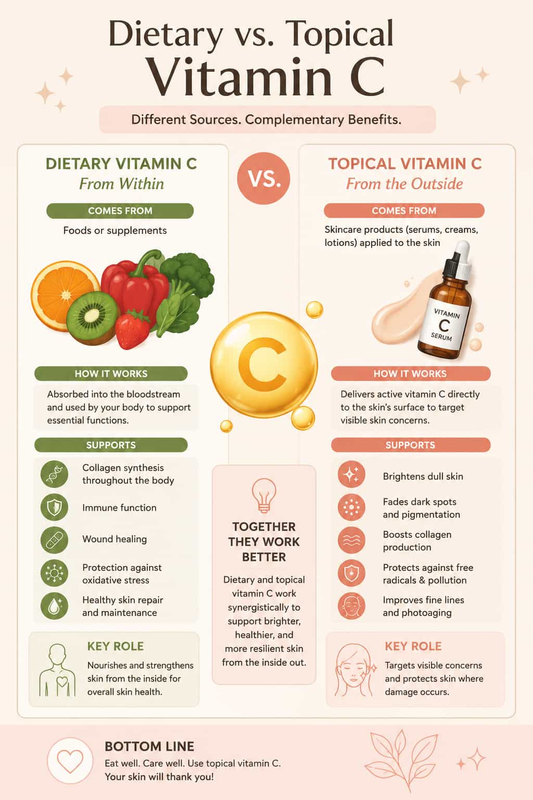
It’s important to remember that a vitamin C serum cannot correct a vitamin C deficiency, just as eating vitamin C-rich foods cannot deliver the high concentrations of vitamin C directly to the skin that topical formulations can.
💡 Tip: For the best results, combine a vitamin C-rich diet with a well-formulated topical vitamin C product. Together, they support healthier, brighter, and more resilient skin from the inside out.
In this guide, we’ll focus on topical vitamin C—how it benefits your skin, how it works, the different forms available, and how to use it correctly for the best results.
Is Vitamin C Good for the Skin?
Yes, absolutely. Vitamin C isn’t just good for your overall health, like your muscles, bones, gums, teeth, and hair. It’s also essential for your skin. It is a well-studied skincare ingredient known for supporting healthy & radiant skin.

What Does Vitamin C Actually Do for Your Skin?
According to scientific research, Vitamin C plays multiple important roles in keeping your skin healthy and functioning properly.
- It is a powerful antioxidant that protects your skin from daily environmental damage.
- It supports collagen in the skin, helping maintain a smooth, firm, and youthful appearance.
- It helps brighten the skin by fading dark spots, evening out skin tone, and reducing excess melanin production.
However, results depend on:
-The type you use
-The concentration &
-Your skin type
Read 👉 7 Categories of Skincare Ingredients Explained for Beginners.
Why Your Skin Needs Vitamin C?
Your skin naturally stores a high amount of vitamin C, especially in the outer layer (epidermis), which is directly exposed to the sun and pollution and needs extra protection.
However, daily exposure to UV rays and environmental stress gradually depletes these levels. Over time, as the vitamin C levels in the skin decrease, your skin starts to look dull, uneven, and more prone to early damage.

Moreover, your skin naturally loses vitamin C as it ages, which makes it harder for it to repair and protect itself effectively.
In simple terms, your skin is constantly losing vitamin C due to daily stress and aging, which is why replenishing it through skincare or diet can actually make a visible difference.
In fact, your skin has special systems just to absorb and use vitamin C, indicating how important this nutrient is for its normal function.
Now that you understand why your skin needs vitamin C, let’s look at its key benefits. Then we’ll move on to the different forms of vitamin C and how to choose the right one to get real results.
What are theBenefits of Vitamin C for Skin?
Vitamin C benefits your skin in several ways, from protecting against daily environmental damage to supporting collagen and reducing pigmentation. Here’s what the science shows.
1. Brightens Skin, Fades Dark Spots, and Fights Discoloration
This is one of the key benefits of vitamin C. It helps reduce pigmentation by blocking ‘tyrosinase’, an enzyme your skin needs to produce melanin (the pigment responsible for dark spots).
Thus, vitamin C helps fade dark spots and improve uneven skin tone and melasma over time by slowing down melanin production in the skin. As a result, the skin appears more radiant and even-toned.

2. Potent Antioxidant
Vitamin C is a powerful antioxidant that helps your skin defend itself against daily environmental damage. Vitamin C:
- Protects the skin from pollution and UV-induced stress
- Neutralizes free radicals that damage skin and speed up aging
- Supports the skin’s natural repair processes

3. Boosts Collagen Production
Vitamin C plays an important role in helping your skin make and maintain collagen — the protein that keeps your skin firm, smooth, and youthful.
It supports collagen production by helping key enzymes function properly. It also protects existing collagen in the skin by slowing down its breakdown. This results in improved skin firmness, reduced fine lines, and better overall skin structure.
4. Anti-Aging Support
Vitamin C protects collagen and reduces skin damage, helping to:
- Slow down signs of aging like wrinkles and fine lines
- Maintain skin firmness and elasticity.
- Prevent premature aging caused by environmental stressors.

5. Enhances Sunscreen Protection
Vitamin C acts as an SPF booster. When vitamin C is applied under sunscreen, it enhances the effectiveness of sunscreen and gives your skin extra protection.
It does not absorb or reflect UVA/UVB rays like sunscreen. Instead, it helps reduce their effects by neutralizing the damage they cause.
Vitamin C:
- Reduces UV-induced damage
- Helps minimize redness and irritation after sun exposure

Now let’s understand
How Vitamin C Works?
1. Antioxidant Protection → Fights Daily Skin Damage
Every day, your skin faces damage from UV rays, pollution, stress, and lack of sleep. These factors generate free radicals. Free radicals are unstable molecules that damage healthy skin cells, break down collagen, and speed up aging.
Vitamin C acts like a protective shield. It neutralizes these free radicals before they can harm your skin.It also works with other antioxidants such as vitamin E and glutathione, creating a stronger defense system that helps protect your skin from ongoing damage.
2. Collagen Support → Builds + Protects Skin Structure
As we discussed earlier, collagen is what keeps your skin resilient and smooth. However, it naturally decreases with age. Moreover, sun exposure accelerates collagen loss.
Vitamin C helps in two powerful ways:
1. It supports collagen production by helping key enzymes (prolyl hydroxylase and lysyl hydroxylase) work properly. It acts like a “fertilizer” for these collagen-making enzymes.
2.Vitamin C not only promotes collagen synthesis but also prevents collagen breakdown by inhibiting MMP enzymes (collagen-eating enzymes). Thus, It protects existing collagen by slowing down its breakdown
3. Pigment Control & Skin Brightening
Your skin gets its color from melanin, which is produced by an enzyme called tyrosinase. Vitamin C helps control this process by:
- Slowing down melanin production
- Reducing excess pigment, like dark spots and acne marks
Over time, this helps improve uneven skin tone and discoloration.
💡 Tip: Vitamin C works even better when combined with ingredients like niacinamide, kojic acid, or arbutin for enhanced brightening results.
Whar are Different Forms of Vitamin C?
Not All Vitamin C Is the Same. Most people use a vitamin C product, see no results, and assume it doesn’t work for them. But the real issue is usually the type of vitamin C you are using.
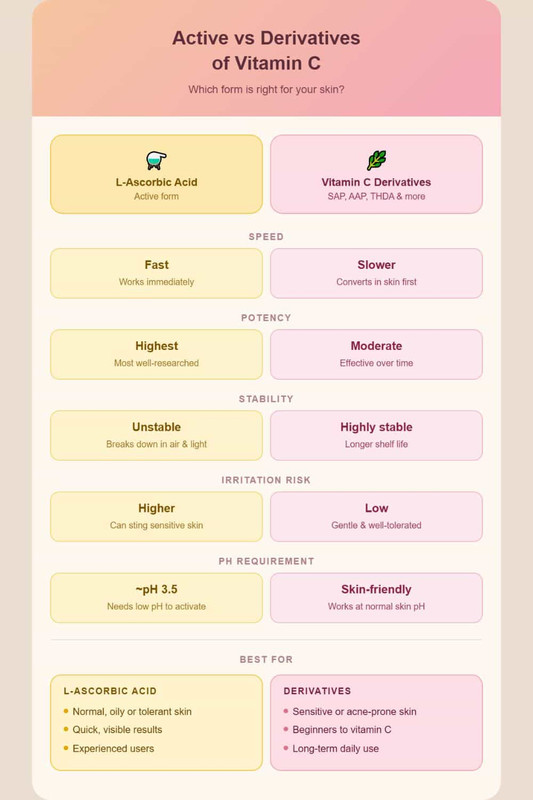
L-Ascorbic Acid (LAA) — The Active Form
L-ascorbic acid is the pure, most effective, and most biologically active form of vitamin C. Here’s how ascorbic acid works:
- Boosts collagen by activating enzymes that build and stabilize skin structure
- Fights oxidative stress from UV rays and pollution, protecting skin from premature aging
- Improves photoaging signs and pigmentation, helping skin look smoother and more even
- It works directly on the skin as soon as you apply it.
However, it comes with some challenges:
- Unstable: Oxidizes quickly when exposed to air and light
- Can irritate: It’s formulated at low pH, i.e., 3.5, which may cause stinging or redness
- Not beginner-friendly: Especially for sensitive or acne-prone skin
Best concentration for L-ascorbic acid:
- 10–20% → effective range
- Start with a lower concentration (<10%) if you’re a beginner
Best for: Normal skin types
Most people choose more stable, gentler vitamin C derivatives, instead of L‑ascorbic acid, due to its instability and irritation issues.
Inactive Forms — Ester derivatives of Vitamin C
These forms are more stable and less irritating than L-ascorbic acid. They need to be converted in the skin to be effective. So, they may show slower results.
Common Types Includes:
1. Tetrahexyldecyl Ascorbate
2. Sodium Ascorbyl Phosphate
3. Magnesium Ascorbyl Phosphate
4. Ascorbyl Glucoside
5. Ethyl Ascorbic Acid
6. Ascorbyl Palmitate
7. Amino Ascorbyl Phosphate
The key benefits of these derivatives are discussed in the table.
| Sr. no. # | Form | Best For | Key Fact | Benefits |
| 1 | Tetrahexyldecyl Ascorbate | All skin types / sensitive | Improves fine lines & firmness Support collagen Targets deep pigmentation & discoloration Has antioxidant properties Very gentle Highly effective Great absorption, even better than L-ascorbic acid Deeply penetrates the skin Good for all skin types Ideal for sensitive or mature skin | |
| 2 | Sodium Ascorbyl Phosphate | Oily / acne-prone skin | Suppresses acne-causing bacteria at 1–5% | Promotes collagen synthesis Reduces melanin production It also shows antibacterial activity against acne-causing bacteria. Great for oily and acne-prone skin Very stable & non-irritating |
| 3 | Magnesium Ascorbyl Phosphate | General use | Stable but poorly absorbed, decent for brightening and collagen support | Gentle, good for basic brightening Gentle collagen support Improves skin repair Helps with hydration & barrier support Suitable for sensitive skin |
| 4 | Ascorbyl Glucoside | Pigmentation/collagen production | Good stability, decent absorption | Helps with pigmentation and uneven tone Suitable for long-term use Good for sensitive skin |
| 5 | Ethyl Ascorbic Acid | Brightening | Both water and lipid-soluble | Brightens dull skin Helps with dark spots Less irritation than L- ascorbic acid More stable in formulations Easily absorbed into the skin |
| 6 | Ascorbyl Palmitate | – | Conversion to active form is questionable | Mild antioxidant support Helps with basic skin protection Lower bioavailability Limited conversion to active form |
| 7 | Amino Ascorbyl Phosphate | Anti-aging / pigmentation | Clinical data showing wrinkle reduction and dark spot fading at 8 weeks | Helps reduce the appearance of wrinkles Fades dark spots & hyperpigmentation Stable and gentle on the skin Good option for anti‑aging + even tone |
Active vs Derivatives of Vitamin C
How to Choose the Right Vitamin C for Your Skin
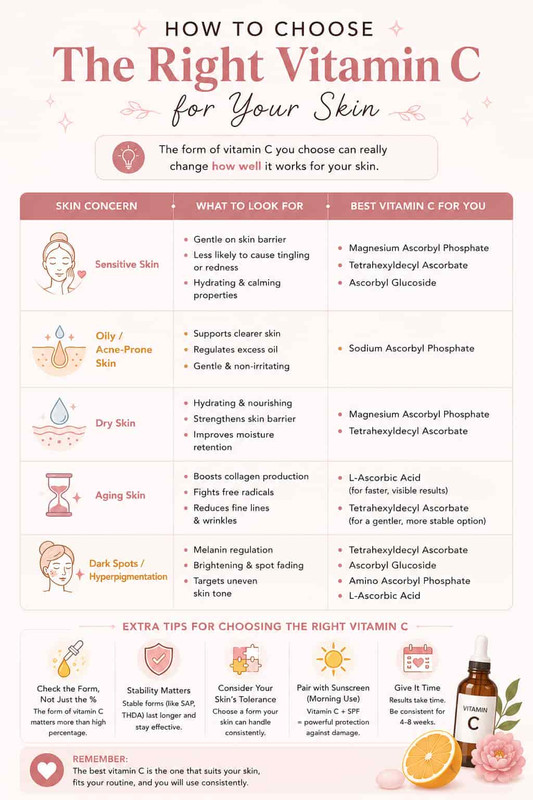
The form of vitamin C you choose can really change how well it works for your skin.
Sensitive skin
If you have sensitive skin, go for gentler forms of vitamin C:
– Magnesium Ascorbyl Phosphate
– Tetrahexyldecyl Ascorbate
– Ascorbyl Glucoside
Oily / Acne-Prone Skin
The best choice for oily or acne-prone skin is Sodium Ascorbyl Phosphate, as it helps support clearer skin while being gentle.
Dry Skin
Dry skin benefits from gentle, hydrating forms of vitamin C, such as:
– Magnesium Ascorbyl Phosphate
– Tetrahexyldecyl Ascorbate
Aging skin
If your goal is anti-aging, you can choose:
– L-ascorbic acid for faster, more visible results
– Tetrahexyldecyl Ascorbate as a gentler, more stable option
Dark Spots / Hyperpigmentation
For dark spots or hyperpigmentation, the best vitamin C forms are:
– Tetrahexyldecyl Ascorbate
– Ascorbyl Glucoside
– Amino Ascorbyl Phosphate
– L-ascorbic acid
Learn 👉 Simple Skincare Routine For All Skin Types (AM/PM)
What Percentage of vitamin C to choose?
- Beginners: Start with 5–10% for a gentle introduction
- Regular use: 10–20% works well for most skin types
- Avoid going above 20%.
- Higher concentration doesn’t increase results and may cause irritation
- Consistency matters more than strength.
- Start low, use regularly, and build up gradually for effective results.
What to Look for in a Vitamin C Product
- Concentration: Aim for 10–20%. That’s ideal for most skin types
- Packaging: Choose dark, airtight bottles to keep your vitamin C fresh and prevent it from oxidizing
- Supporting ingredients: Look for vitamin E and ferulic acid. They make your vitamin C even more stable and effective.
How to Use Vitamin C in Your Routine?
Vitamin C is an effective skincare ingredient, but many people still struggle with it. Some see great results, while others deal with irritation, uneven results, or no change at all. Here’s how to use vitamin C on the face.
When to use vitamin C, morning or night?
You can use it both times, but morning use with sunscreen gives the most protection.
In the morning: Helps protect your skin from sun damage, pollution, and daily stress
At Night: Supports repair and works well with your nighttime routine
How to Layer Vitamin C With Other Skincare?
Step 1: Cleanse → Wash your face with a gentle cleanser.
Step 2: Vitamin C → Apply vitamin C serum on damp skin.
Step 3: Moisturize → Follow with your regular moisturizer.
Note: When your moisturizer already contains vitamin C, you can skip applying a separate moisturizer or serum.
Read 👉 Easy 3-Step Beginners Skincare Routine (AM/PM)
When Will You See Results from Vitamin C?
One of the biggest misconceptions about vitamin C is that it delivers overnight results. While some people notice a healthy glow within a few weeks, most of its benefits take time and consistent use.
Here’s what you can realistically expect:
| Time | What You May Notice |
| 2–4 weeks | Skin may start looking brighter, smoother, and more radiant. |
| 4–8 weeks | Dark spots, post-acne marks, and uneven skin tone may gradually begin to fade. |
| 8–12 weeks | Improvements in skin firmness, elasticity, and the appearance of fine lines become more noticeable as collagen production is supported over time. |
The exact timeline depends on several factors, including the type and concentration of vitamin C you use, your skin concerns, how consistently you apply it, and whether you protect your skin with sunscreen every day.
How to Tell if Your Vitamin C Has Oxidized?
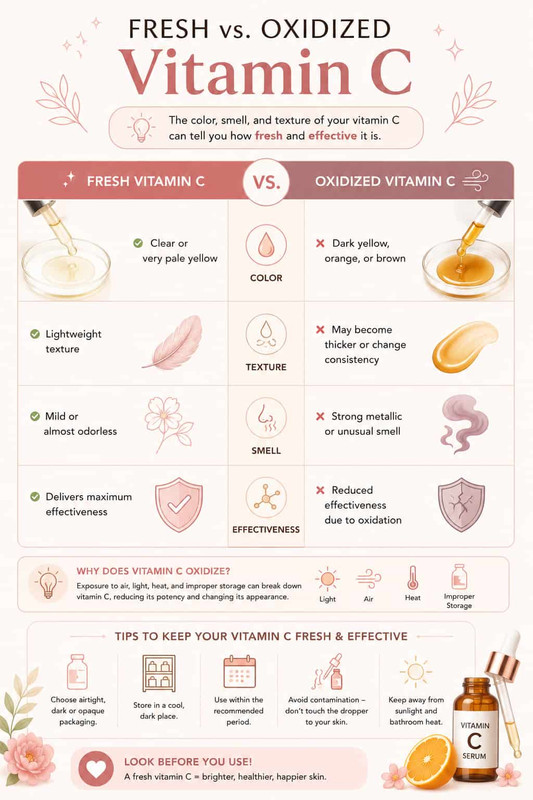
Vitamin C is one of the most unstable skincare ingredients. Exposure to air, heat, and light gradually causes it to oxidize, making it less effective over time. While an oxidized serum isn’t always harmful, it won’t deliver the same brightening and antioxidant benefits as a fresh formula.
Here are some common signs that your vitamin C serum has oxidized:
How to Store Vitamin C Serum Properly?
Vitamin C breaks down when exposed to air, light, and heat, which is why proper storage is important to maintain its effectiveness.
To help your serum stay stable for longer:
- Store it in a cool, dry place away from direct sunlight.
- Keep the bottle tightly closed after every use.
- Avoid storing it in a hot bathroom if it gets steamy frequently.
- Choose products packaged in dark glass bottles or airtight pumps, which help slow oxidation.
- If the product label recommends refrigeration, follow the manufacturer’s instructions.
Vitamin C Side Effects, Safety & Common Mistakes to Avoid
Vitamin C is one of the safest and most well-researched skincare ingredients. However, like any active ingredient, it can irritate if you use the wrong form, concentration, or application method.
Who Benefits Most from Vitamin C?
Vitamin C is an excellent choice if you’re looking to improve:
- Dull or tired-looking skin
- Dark spots and hyperpigmentation
- Uneven skin tone
- Early signs of aging
- Sun damage and photoaging
Who Should Be More Careful?
You may need to introduce vitamin C gradually if you
- Have sensitive skin
- Have a damaged skin barrier
- Are new to active skincare ingredients
In these cases, start with a lower concentration (5–10%) or choose a gentler vitamin C derivative such as Magnesium Ascorbyl Phosphate, Sodium Ascorbyl Phosphate, or Tetrahexyldecyl Ascorbate.
Possible Side Effects
Vitamin C is generally well tolerated, but some people may experience:
- Mild tingling when first applying it
- Temporary redness or irritation, especially with high concentrations of L-ascorbic acid
- Breakouts if a formula doesn’t suit their skin
If irritation continues after several uses, stop using the product and consult a dermatologist.
Common Vitamin C Mistakes to Avoid
Avoid these common mistakes to get the best results:
- Using a concentration that’s too high for your skin.
- Skipping sunscreen after applying vitamin C in your morning routine.
- Using an oxidized vitamin C serum.
- Applying vitamin C on a damaged skin barrier without allowing it to recover first.
- Layering it with multiple strong active ingredients if your skin is sensitive.
- Expecting overnight results instead of using it consistently.
Learn 👉 10 Skincare Mistakes To Avoid That Can Damage Your Skin Barrier.
Quick tip 💡: Start with a lower concentration, patch test new products, and introduce vitamin C gradually. Consistency—not strength—is the key to long-term results.
Final takeaway:
Vitamin C is one of the most effective ingredients in skincare, and yes, vitamin C is good for the skin. It brightens, protects, and strengthens your skin, but only if you pick the right form and concentration, and use it correctly. Consistency matters, and understanding how vitamin C works and how to layer it safely will help you see real results without irritation.
Learn 👉 A Complete Beginner’s Guide to 7 Categories of Skincare Ingredients
FAQs
1. Is vitamin C good for the skin?
Yes! Vitamin C is a highly effective ingredient for your skin. It brightens, protects against environmental damage, and supports collagen for smoother, firmer skin. Using the right type consistently can make a visible difference.
2. Can I use vitamin C daily?
Absolutely! You can use vitamin C every day, ideally in the morning. Just make sure to follow it with sunscreen so that it works best to protect your skin from daily environmental damage.
3. Can I use vitamin C with niacinamide?
Yes, you can! These two ingredients work well together. To avoid irritation, you can layer them separately (vitamin C first, wait a minute, then niacinamide). Both work great for brightening and evening skin tone.
4. How long does it take to see results from vitamin C?
Most people start noticing brighter, more even skin in 4–6 weeks of consistent use. For collagen and fine line benefits, it can take around 8–12 weeks. Patience and consistency are key.
5. How often should I use a vitamin C serum?
You can use vitamin C every day in your morning skincare routine. If your skin tolerates it well, you can use it twice a day (AM/PM). Make sure to apply sunscreen in your morning routine afterwards.
6. Can Vitamin C Cause Breakouts?
Vitamin C usually doesn’t cause breakouts, but breakouts can happen if your skin is sensitive or the formula is too strong. Start with a lower concentration, patch test first, and opt for gentler forms like sodium ascorbyl phosphate, Magnesium Ascorbyl Phosphate, or Tetrahexyldecyl Ascorbate to reduce the risk of breakouts.
7. How do I start using vitamin C as a beginner?
As a beginner, start with a low concentration (5–10%), a few times a week. Patch test first and always follow with moisturizer and sunscreen. Once your skin gets comfortable, increase the frequency of it. Consistency matters more than high strength!
Found this article helpful? Share it with someone you care about.
Stay radiant! Catch you in the next article.
Read More

Fall Skincare Routine for Glowing Skin: How to Keep Your Skin Hydrated
A practical fall skincare routine guide to building a routine for glowing skin, covering how…

How to Clean Makeup Brushes and Sponges: A Complete Guide 2026
A practical beginner’s guide to ‘how to clean makeup brushes and sponges,’ covering the right…

Why Does My Makeup Look Cakey, Patchy, Dry, or Separated? Here’s How To Avoid Cakey Makeup and Make Foundation Look Smooth
A complete makeup guide to ‘why does my makeup look cakey, ‘ breaking down common causes…

How To Apply Makeup Step-by-Step for Beginners | Beginner Makeup Guide 2026
A beginner’s makeup guide showing how to apply makeup step-by-step for beginners, with the right…

Makeup for Beginners: The Ultimate Guide To Building Your First Makeup Kit
The makeup for beginners guide explains which products you actually need, how to choose formulas…

10 Foods for Clear Skin: A Science-Backed Guide to Healthier, Glowing Skin
A science-backed guide to 10 foods for clear skin, exploring how the right nutrients can…


Pingback: Skincare Ingredients Explained: A Complete Guide (2026)
Pingback: Easy 3-Step Beginner Skincare Routine For Every Skin Type
Pingback: Simple Fall Skincare Routine For Glowing Skin (2026) | Skin Alchemy