
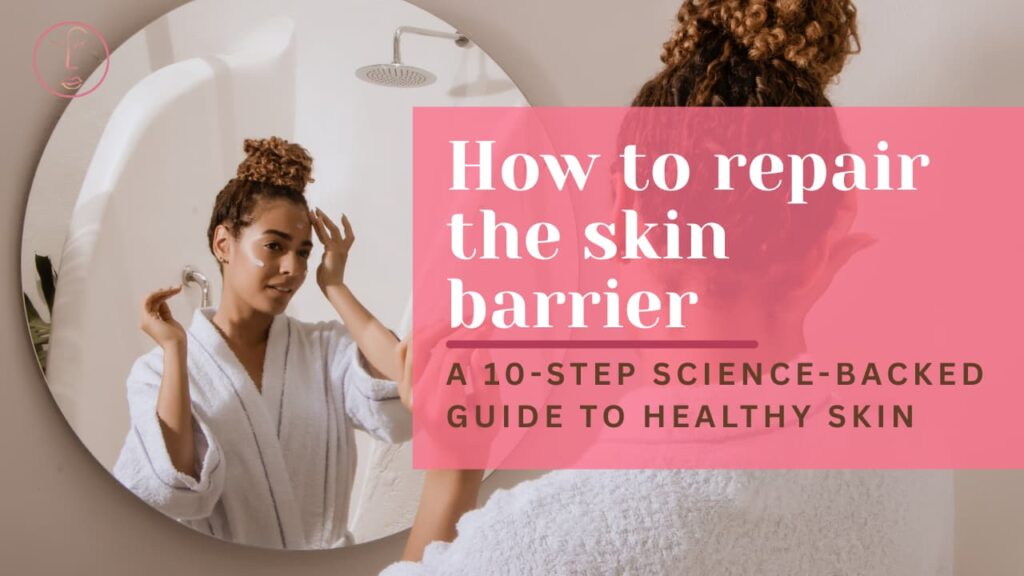
A skin science guide explains how to repair the skin barrier, support skin healing, and restore healthy barrier function.
If your skin is not getting resilient and calm despite using good skincare. You are facing skin issues like
- Repetitive acne cycles,
- Increased sensitivity, redness, & itchiness,
- Stinging after skincare
- Dehydrated and irritated skin
- Visible fine lines & wrinkles
The reason for sudden sensitivity, aging, or breakouts might be a compromised skin barrier.
In this guide, I’ll walk you through 10 science-backed steps on how to repair your skin barrier, support healing, and restore healthy, resilient skin.
- Why Is It Important To Maintain A Healthy Skin Barrier?
- How to Repair The Skin Barrier
- How long does it take to repair the Skin Barrier?
- How to Restore Skin Barrier: Do’s and Don’ts
- When Is Skincare Not Enough, And Professional Help Needed?
- Quick Checklist: How To Repair Skin Barrier
- Key Takeaways
- FAQs
- Read Other Posts
- Explore Categories
The skin barrier is your skin’s first protective layer (stratum corneum). It is made of dead skin cells and lipids that fill the gaps between them. Various everyday skincare mistakes, as well as environmental factors, can damage the skin barrier.
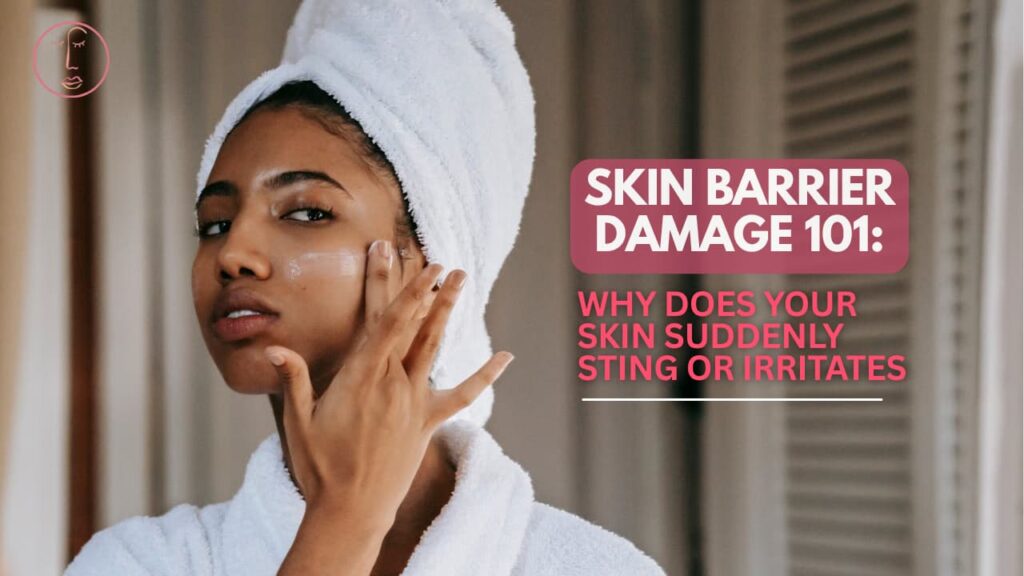
Read More: Skin Barrier Damage 101
Quick glow-up summary
- Stop your current skincare routine
- Calm your skin with barrier-friendly, soothing ingredients
- Hydration + moisturization are key to repairing your skin barrier.
- Follow a minimal skincare routine.
- Maintain your skin’s natural lipids, i.e, ceramides, cholesterol, and fatty acids.
- Maintain your skin’s acidic pH
- Protect your skin from the harsh climate and environmental stressors
- Opt for a healthy lifestyle to support the skin barrier from within.
- Avoid anything that may disrupt your barrier healing process
- With the right care, the skin barrier can be repaired within 1-4 weeks
- In case of severe damage, it may take 1-2 months
- Consult a dermatologist if you have a specific skin condition or extreme irritation.
Let’s first understand;
Why Is It Important To Maintain A Healthy Skin Barrier?
The main function of the skin barrier is to keep good things inside your skin and bad things outside. The proper functioning of the skin barrier is important because:
- It maintains the skin’s hydration by preventing trans-epidermal water loss (TEWL)
- It holds the natural moisture inside the skin, i.e., maintains the moisture level of the skin
- The acidic pH of the acid mantle protects the skin from free radicals, irritants, germs, bacteria, toxins, and environmental stressors.
- It helps the skin recover from wounds, dark spots, and more.
Now, let’s uncover how to heal your skin barrier.
How to Repair The Skin Barrier
When it comes to skin barrier repair, you need to follow 3 simple rules:
Rule no. 1: Be gentle
Rule no. 2: Be consistent
Rule no. 3: Be patient
The moment you realize that the real reason behind your skin issues is a damaged skin barrier. First things first, you need to
Pause
Pause everything that’s leading to a vulnerable skin barrier.
- Put your 10-step skincare routine on pause
- Stop using all your skincare products, even if they feel gentle.
- Reduce actives (Vitamin C, retinoids, etc.)
- Discontinue exfoliation, both chemical & physical.
- Temporarily pause your acne products.
In short, stop everything you are currently doing to your skin.
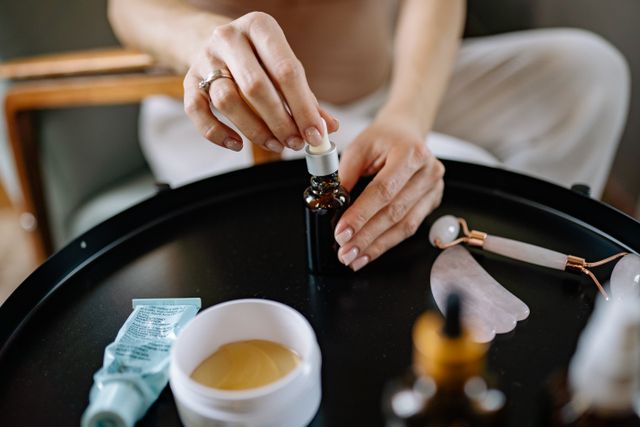
The second step for healing the skin barrier is:
Soothe the Skin
Your skin has become stressed and angry due to barrier damage. Calm it down by incorporating anti-inflammatory products.
Skin Barrier Repair Ingredients
Use barrier-friendly, soothing ingredients like:
- Petroleum jelly forms a protective layer on the skin, prevents moisture loss, & heal the skin barrier.
- Panthenol deeply hydrates, soothes irritation, and supports the skin barrier.
- Allantoin calms inflammation, promotes cell turnover, and helps repair damaged skin.
- Bisabolol, an anti-inflammatory and antioxidant, reduces redness and supports barrier recovery.
- Zinc oxide (ZnO) protects skin from irritants, soothes irritation, and aids in barrier healing.
- Niacinamide reduces inflammation and repairs the skin barrier.
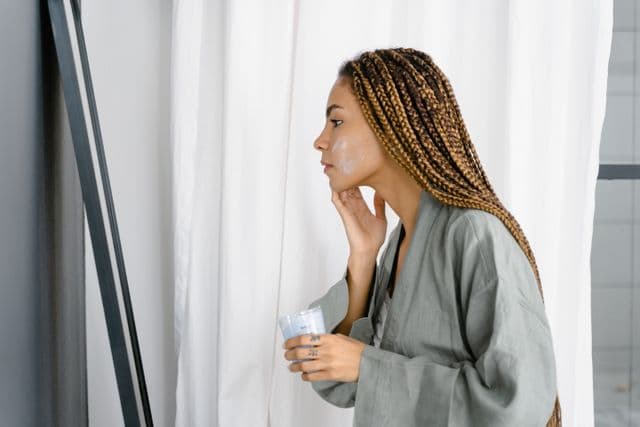
A compromised skin barrier lacks moisture. Therefore,
Quench your Skin’s Thirst
Use humectants like:
These ingredients can effectively quench your skin’s thirst. They can:
- Deeply hydrate the skin
- Repair the skin barrier actively
- Soothe irritations
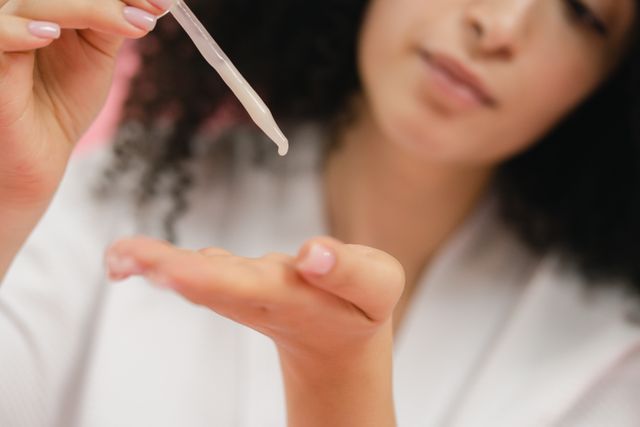
Read: A Science-backed Guide to Glycerin
To seal the hydration inside the skin, you need to;
Moisturize your Skin
Moisturizers are a barrier therapy. They work on the skin’s surface while also supporting hydration within the skin. Look for moisturizers that contain barrier-supporting ingredients such as:
- Barrier-strengthening lipids: ceramides, cholesterol, and linoleic acid
- Emollients: petroleum jelly, jojoba oil, and squalane
These ingredients can help restore and support the skin barrier by:
- Locking in moisture and reducing transepidermal water loss (TEWL)
- Strengthening barrier function and supporting skin repair
- Improving skin hydration and helping maintain moisture balance
- Protecting the skin from irritation and external stressors
- Supporting healthy skin cell turnover and shedding of dead skin cells
- Replenishing essential lipids that are naturally present in the skin barrier
- Forming a protective layer that helps prevent moisture loss
- Leaving the skin feeling softer, smoother, and more comfortable
After your skin has calmed down;
Build a Minimalistic Skincare Routine
The skincare routine should be simple and mindful.
- Use a gentle, non-stripping cleanser
- Apply a serum with barrier-soothing ingredients
- Look for a lightweight moisturiser with ceramides, humectants (glycerin, hyaluronic acid), and emollients.
- Apply an even layer of petroleum jelly or ZnO cream at night to repair the skin barrier.
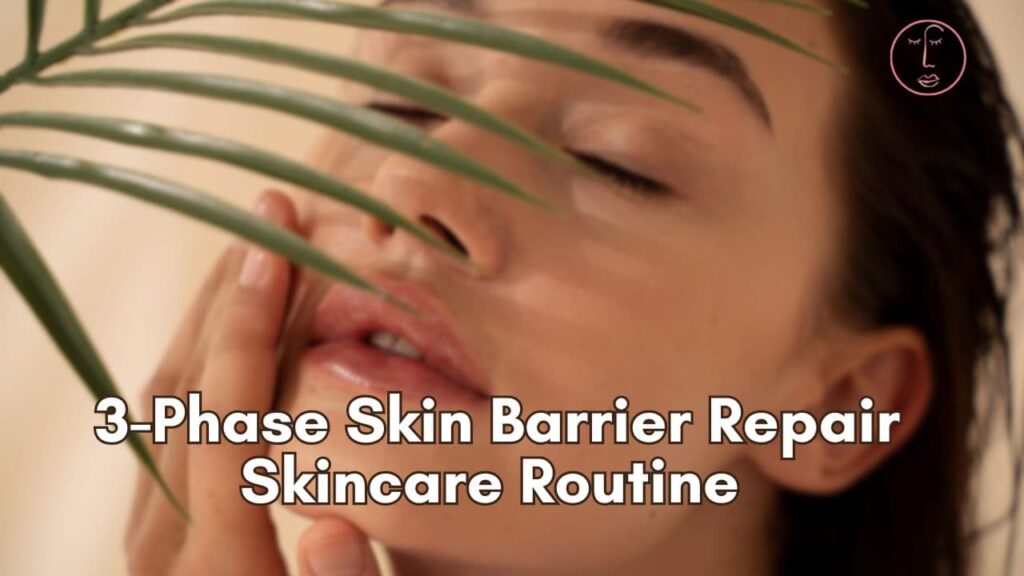
Read More: Skin Barrier Repair Routine: 3 Phases To Restore Your Skin Barrier.
Read more: What Causes A Damaged Skin Barrier? 10 Skincare Mistakes To Avoid.

Maintain your Skin’s Lipid Ratio
The skin barrier primarily consists of 3 important lipids: ceramides (50%), cholesterol (25%), and free fatty acids (15%). The presence of these lipids in a balanced ratio is crucial for skin barrier health, to keep skin hydrated and show resilience, and to prevent moisture loss.
Studies shows that providing the skin with skin-identical lipids in a balanced ratio can significantly speed up healing. Moreover, researchers suggested that the skin barrier can be repaired more efficiently when ceramides, cholesterol, and fatty acids are used together.
Therefore, look for moisturizers that contain all three lipids. Even the presence of one lipid in higher amounts, while others are also present, can increase barrier healing up to 3 times.

Balance your Skin’s Natural pH.
Healthy skin has a pH of 4.5-5.5; i.e., it’s slightly acidic. Research has suggested that balancing the skin’s pH improves barrier health and repair. The acidic pH also helps the skin’s enzymes produce ceramides, strengthening the barrier. Therefore, look for products with a pH of 4-5, especially cleansers.
A good skincare routine is only one part of how to repair the skin barrier. You should also:
Protect Your Skin from the Environment
Various Environmental factors, such as climate, pollution, UV rays, cold, harsh winds, and humidity. They are also the leading cause of barrier damage. Therefore, protect your skin barrier from these aggressors.
- Use moisturizers rich in barrier lipids such as ceramides, cholesterol, and fatty acids. This will strengthen your skin barrier and protect it from environmental aggressors.
- Apply petroleum jelly at night to help protect your healing skin barrier from environmental stressors.
- Avoid excessive sun exposure or stay in the shade.
- Never forget your sunscreen, even if it’s raining outside.
- Minimize outdoor activities during peak sun and pollution hours.
- Always wash your face with a gentle cleanser before bed to remove dust and pollutants.
- Wear a hat or scarf to protect your skin when outdoors.
- You can also use humidifiers if you live in an arid/cold area
- Or use air purifiers if you live in an area of high pollution

A healthy skin barrier needs support from both the outside and the inside. Along with a good skincare routine and protecting your skin from environmental damage, you should also:
Support your Skin Barrier Internally
Take care of yourself by:
Improving your sleep quality: Lipid synthesis occurs at night. Several studies have suggested that poor sleep quality may hinder the skin barrier’s ability to heal.
Managing your stress: Stress increases cortisol (stress hormone) levels. It can cause inflammation in your skin. Thus, disrupting the barrier to healing.
Eating a balanced diet that includes:
- Omega-3 fatty acids (fatty fish, walnuts, flaxseed, etc.)
- Prebiotics & probiotics (yoghurt, oats, garlic, onion, banana, etc)
- High-fiber foods like fruits, whole grains, and legumes
- Healthy fats and oils (extra virgin olive oil, seeds, nuts)
- Protein (chicken, chickpeas, fish, eggs, lentils, nuts, seeds, yogurt, etc.)
- Antioxidant-rich foods like fruits, dark chocolate, green tea, carrots, etc.
Read 👉 10 Foods To Add In. Your Diet To Get Clear, Glowing And Healthy Skin
Keeping yourself Hydrated: When your body is well hydrated, your skin is better able to maintain moisture and support barrier recovery.

Last but not least, you should also;
Avoid these Skincare Ingredients
- Vitamin C, especially L-ascorbic acid, can irritate your skin.
- Thick, heavy creams may cause breakouts, clogged pores, and comedones. However, you can use thick creams once your skin has calmed.
- Exfoliating acid (AHA, BHA, & PHA)
- Retinoids (retinol, adapalene, tretinoin, retinaldehyde) accelerate skin cell turnover. They can stress the compromised skin barrier.
- Products with fragrances and essential oils. They may increase the risk of allergies and irritation.
- Harsh, foaming, and sulphate-based cleansers and soaps
- Heavy-alcohol products may cause stinging and irritation.
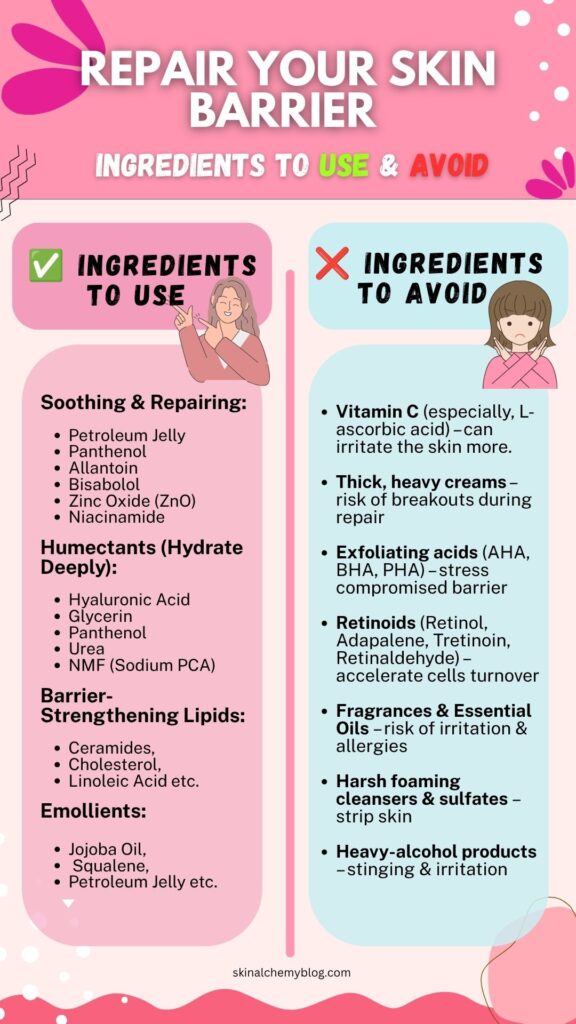
Skincare Ingredients to use and to avoid
How long does it take to repair the Skin Barrier?
If the skin barrier is mildly damaged, it may take 1-2 weeks to heal. In case of moderate damage, it may take 2-4 weeks. However, if the skin barrier is severely damaged, it may take 1-2 months to recover properly.
Disclaimer: These are rough estimates, as skin barrier recovery varies from person to person depending on the extent of damage and individual skin.
How to Restore Skin Barrier: Do’s and Don’ts
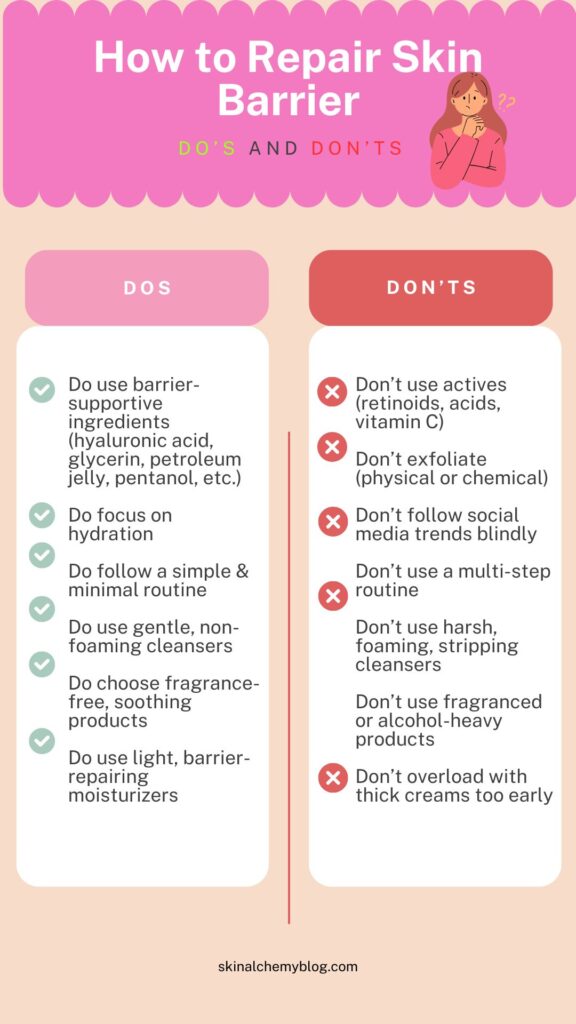
How to repair skin barrier: Do’s and Don’ts
Some extra tips: How to restore the skin barrier
Here are a few tips on how you can repair your skin barrier:
- Avoid touching your face
- Try to go some makeup-free days until the skin feels calm
- Avoid razors or shaving
- Use lukewarm water for a bath
- Reduce prolonged water content
- Patch test the product before use
- Protect skin from fabric friction / mechanical scrubbing
- Use soft, clean pillows to sleep
When Is Skincare Not Enough, And Professional Help Needed?
It is highly recommended to see a Dermatologist if;
- You have specific skin conditions (eczema, rosacea, etc.).
- You have any allergies, infections, issues, or concerns.
- You are sensitive to any product or ingredient.
- You don’t see any recovery even after proper care and protection.
- Your skin is getting worse instead of healing.
- You feel extreme burning, stinging, and redness.
- You have persistent inflammation and irritation.
- Severe dryness and flakiness
- You live in an area with extreme climate conditions that repeatedly damage your skin barrier.

Quick Checklist: How To Repair Skin Barrier
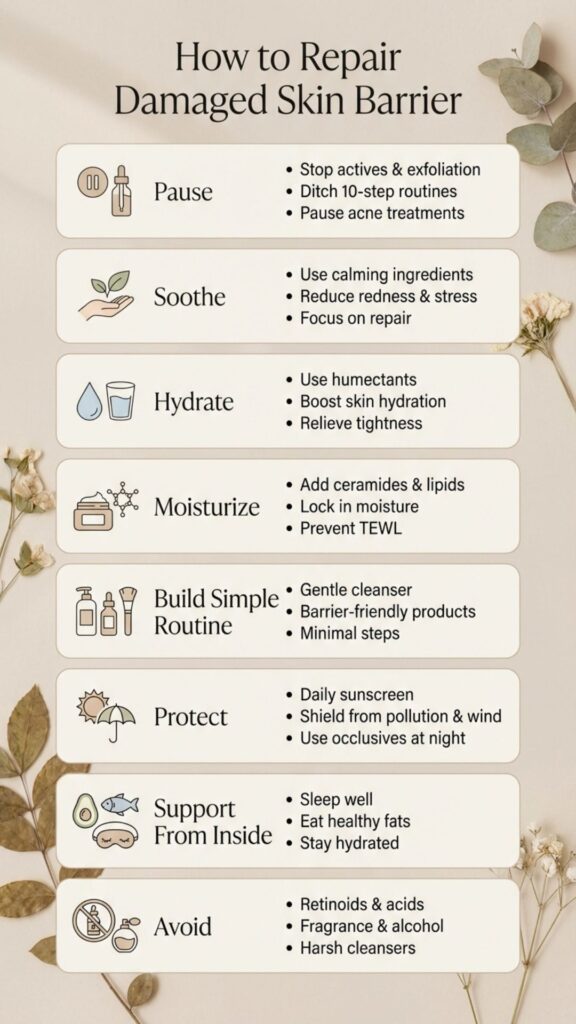
How to repair skin barrier infographic
Key Takeaways
If you are wondering how to repair the skin barrier, keep your routine simple, use gentle and barrier-supportive skincare products, and avoid ingredients or habits that can cause further damage. Moreover, protect your skin barrier from environmental triggers and adopt healthy lifestyle habits such as staying hydrated, managing stress, and getting enough sleep to promote healthier, more resilient skin over time.
Want a complete step-by-step barrier repair routine? Click 👉 Skin Barrier Repair Routine.
Or
Read 👉 If you’re wondering how barrier damage affects different skin types.
FAQs
1. Does Diet Affect Your Skin Barrier?
Yes. A balanced diet rich in healthy fats, protein, vitamins, and antioxidants, along with adequate hydration, supports skin barrier repair. Your skin needs these nutrients to build and maintain a healthy barrier. In contrast, nutrient deficiencies and a diet high in ultra-processed, high-sugar foods may contribute to inflammation and weaken barrier function.
2. Can Stress or Sleep Affect My Skin Barrier?
Yes. Stress and poor sleep can weaken your skin barrier. Chronic stress increases cortisol levels, which can promote inflammation, disrupt the skin’s protective barrier, and increase water loss. At the same time, lack of sleep slows skin repair and regeneration, making the barrier more prone to dryness, irritation, and sensitivity. Over time, this may also contribute to premature skin aging and breakouts. Managing stress and getting 7–9 hours of quality sleep can help maintain a strong, healthy skin barrier.
3. How To Repair The Skin Barrier Overnight?
You can’t fully repair your skin barrier overnight, but you can calm and support it so it starts healing by morning. Follow a simple nighttime routine: use a gentle cleanser, apply a barrier-repair moisturizer, and seal it with a thin layer of petrolatum to lock in moisture. Also, prioritize quality sleep and stay hydrated. By morning, your skin may feel less irritated, more hydrated, and more comfortable, although complete barrier repair takes time.
4. Is Hyaluronic Acid Good For The Skin Barrier?
Yes. Hyaluronic acid is beneficial for the skin barrier because it attracts and holds water in the skin, helping keep it hydrated and plump. Well-hydrated skin supports a healthier barrier and reduces dryness and tightness. For best results, apply hyaluronic acid to slightly damp skin and follow with a moisturizer to seal in hydration.
5. Does Niacinamide Strengthen The Skin Barrier?
Yes. Niacinamide helps strengthen the skin barrier by increasing ceramide production and supporting the skin’s natural lipid barrier. It helps reduce moisture loss, calm inflammation, and make the skin more resilient. With regular use, niacinamide can improve barrier function and help reduce sensitivity.
6. What Ingredients Are Best For Repairing The Skin Barrier?
The best ingredients for repairing the skin barrier include ceramides, cholesterol, fatty acids, glycerin, hyaluronic acid, niacinamide, and panthenol. Together, they help replenish barrier lipids, attract and retain moisture, soothe irritation, and support the skin’s natural repair process.
Found this article helpful? Share it with someone you care about.
Stay radiant! Catch you in the next article.
Read Other Posts
What Does Hyaluronic Acid Do for Your Skin? A Science-Backed Guide to Hyaluronic Acid Benefits & Uses
A science-backed guide to what does hyaluronic acid do for your skin, its research-backed benefits,…
Is Glycerin Good for Skin? A Science-Backed Guide to Benefits, Uses & Side Effects
A science-backed guide answering “Is glycerin good for skin?” Explore glycerin benefits for skin, how…

Fall Makeup 2026: Trends, Colors & Easy Looks to Try
The fall makeup guide explores the latest 2026 trends, flattering autumn colors, and easy step-by-step…

Fall Skincare Routine for Glowing Skin: How to Keep Your Skin Hydrated
A practical fall skincare routine guide to building a routine for glowing skin, covering how…
How to Clean Makeup Brushes and Sponges: A Complete Guide 2026
A practical beginner’s guide to ‘how to clean makeup brushes and sponges,’ covering the right…

Why Does My Makeup Look Cakey, Patchy, Dry, or Separated? Here’s How To Avoid Cakey Makeup and Make Foundation Look Smooth
A complete makeup guide to ‘why does my makeup look cakey, ‘ breaking down common causes…
Explore Categories
Skincare Insights
Discover the science behind healthy skin with science-backed insights on skincare ingredients, routines, and skin health.
Beauty Inside-out
.png)
Understand how nutrition, lifestyle, and wellness support healthy skin, stronger hair, and beauty from within.
Makeup Guide

Practical makeup guidance to help you choose products, improve application, and use cosmetics safely with confidence.
Pingback: Easy 3-Step Beginner Skincare Routine For Every Skin Type
Pingback: Skin Barrier Damage 101: Why Your Skin Suddenly Stings
Pingback: What Causes A Damaged Skin Barrier? 10 Skincare Mistakes To Avoid.
Pingback: Simple Fall Skincare Routine For Glowing Skin (2026) | Skin Alchemy
Pingback: 10 Foods For Clear Skin You Should Add To Your Diet Today
Pingback: Is Glycerin Good For Skin? A Complete Science-Backed Guide To Benefits, Uses & Side Effects
Pingback: What Does Hyaluronic Acid Do For Your Skin? An Easy Science-Backed Guide To Hyaluronic Acid Benefits & Uses