A science-backed guide to what does hyaluronic acid do for your skin, its research-backed benefits, how to choose the right formula for your skin type, how to use it effectively, and what to know about potential side effects and realistic results.
You’ve probably heard about hyaluronic acid and its claim of hydrated, plump-looking skin. Maybe you’re thinking of adding a hyaluronic acid serum to your skincare routine. Before you buy one, it helps to understand what hyaluronic acid does for your skin, what benefits you can realistically expect, and whether you actually need a separate serum.
Hyaluronic acid (HA) is a humectant that helps the outer layers of your skin retain moisture. This can leave skin feeling softer and looking plumper temporarily, although the results depend on the product you use.
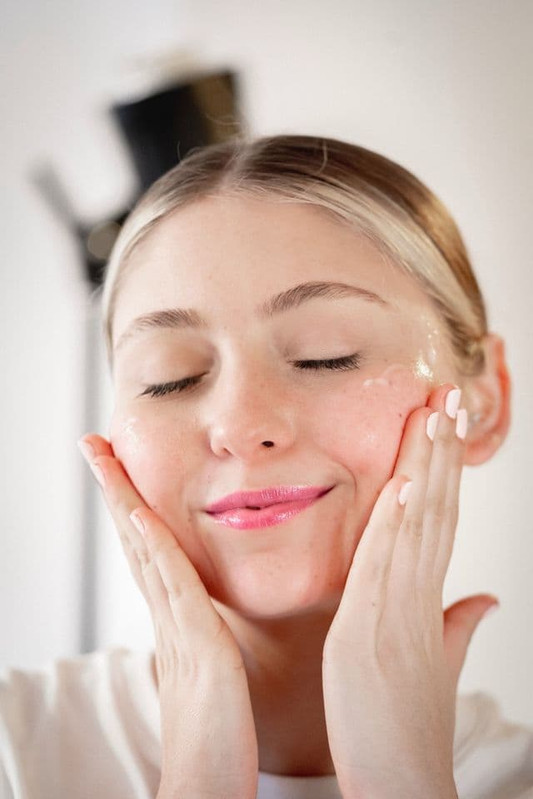
Human studies suggest that topical HA can improve skin hydration, but the evidence for other benefits is less conclusive. With my background in chemistry and as a science-backed beauty and wellness blogger, I look beyond skincare trends to understand what research actually shows, where the evidence has limitations, and what those findings mean for everyday skincare.
In this guide, you’ll learn about hyaluronic acid benefits for skin, how to use hyaluronic acid, how to choose a product for your needs, and whether you need a separate serum.
Read: A beginner’s guide to learn about skincare ingredients.
- What Is Hyaluronic Acid and What Does It Do for Your Skin?
- Hyaluronic Acid Benefits for Skin: What Does Hyaluronic Acid Do for Your Skin?
- Quick Answers About Using Hyaluronic Acid
- Which Hyaluronic Acid Should You Choose?
- Is Hyaluronic Acid Good for Your Skin Type?
- Hyaluronic Acid Side Effects: Stickiness, Pilling and Irritation
- Key Takeaway
- FAQs
- Read More:
- Explore Our Category
What Is Hyaluronic Acid and What Does It Do for Your Skin?
Hyaluronic acid (HA) is a molecule naturally found in the body, including the skin, joints, and eyes. It belongs to a group of substances called glycosaminoglycans and helps tissues retain water. In skincare, HA acts as a humectant, helping the outer layers of your skin retain moisture, making skin look soft, supple, and plump.
Your skin naturally contains hyaluronic acid (HA), but its amount and distribution can vary with age and the area of skin studied. Your skin naturally contains hyaluronic acid (HA), which helps keep it hydrated. Research suggests that HA changes as we age, but the changes are not as simple as losing it completely. A 1994 study found that the total amount of HA in skin did not significantly change with age, while a 2021 study found lower HA levels in the sun-exposed skin of older people.

These findings show that age-related changes are more complex than a simple decline in HA throughout the skin. Topical HA can help hydrate the skin’s surface, but it does not simply replace the HA naturally present in your body or reproduce all its functions.
Learn: 10 Foods to include in your diet for healthy, glowing skin.
Hyaluronic Acid Benefits for Skin: What Does Hyaluronic Acid Do for Your Skin?
The main hyaluronic acid benefits for skin relate to hydration and a temporarily plumper appearance. Some studies have also reported improvements in fine lines with specific HA-containing products, although results vary and not every claim has equally strong evidence.
Hyaluronic Acid Helps Hydrate the Skin
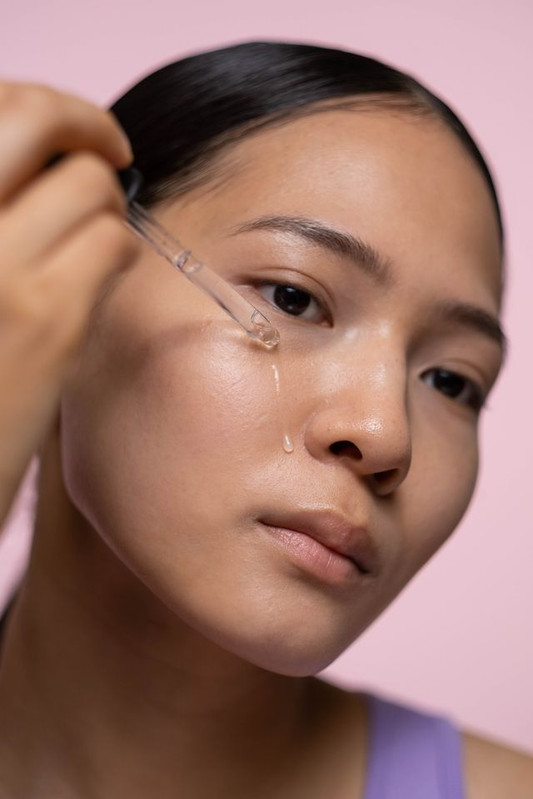
HA is primarily used in skincare to improve hydration. In a study involving 20 healthy women, a moisturizer containing 1% HA, 5% glycerin, and Centella asiatica extract increased measured skin hydration, with the improvement still detectable 24 hours after one application. The study used a formula containing several active ingredients, so the individual contribution of hyaluronic acid to the observed results remains unclear.
May Improve the Appearance of Fine Lines and Wrinkles
Dehydration can make fine lines look more noticeable, so improving skin hydration may temporarily soften their appearance. Some research has explored whether regular use of hyaluronic acid products can make wrinkles less noticeable over time.
In a 60-day study of 76 women, eye creams containing different molecular weights of HA improved hydration and elasticity compared with the control cream. Significant reductions in wrinkle depth were reported only with the 50 and 130 kDa formulations. This suggests results may differ between formulations and may not apply equally to every HA product.
Another six-week study of 40 women reported improvements in hydration, plumpness, smoothness, and the appearance of fine lines after using an HA serum alongside sunscreen. However, it had no placebo control group, so it cannot establish how much improvement came from the serum itself or from HA specifically.
Does Hyaluronic Acid Repair the Skin Barrier?
Hydration is an important part of skin health, but it doesn’t tell us the whole story about skin barrier repair. In a four-week study of a low-molecular-weight HA lotion, researchers found improved hydration but no significant differences in transepidermal water loss (TEWL) or dry-skin symptoms between the tested treatments. This means the study supports a hydration benefit, but not a clear improvement in barrier function. HA can still be a useful part of a barrier-care routine, even though hydration alone doesn’t confirm barrier repair.

Learn: Easy 10 science-backed steps to repair your skin barrier.
Learn: Easy 3-phase skincare routine to restore your skin barrier.
What Can You Realistically Expect from Hyaluronic Acid?
Hyaluronic acid can be a useful addition to your skincare routine, especially if your skin feels dehydrated, looks dull, or has fine lines that become more noticeable when your skin is dry. By increasing moisture in the outer layers of the skin, it can help improve softness, smoothness, and the appearance of plumpness.
A Simple Step-by-Step Routine
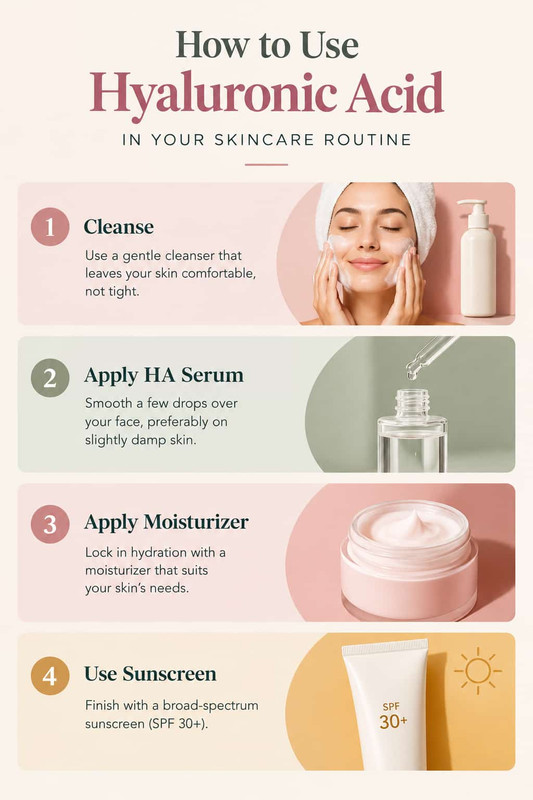
- Cleanse gently. Use a cleanser that leaves your skin feeling comfortable, not tight or stripped.
- Apply your hyaluronic acid serum. After cleansing, smooth a few drops over your face, following the product’s instructions. Applying it to slightly damp skin is a practical option before moving on to your moisturizer.
- Apply moisturizer. If your skin tends to feel dry, follow your serum with a moisturizer that helps reduce moisture loss. If your current moisturizer already keeps your skin comfortable, you may not need a separate HA serum.
- Finish with sunscreen in the morning. Use a broad-spectrum sunscreen with SPF 30 or higher. HA does not provide sun protection, so it cannot replace sunscreen.
Learn: Easy beginner’s skincare routine for all skin types
Quick Answers About Using Hyaluronic Acid
Should you apply hyaluronic acid to damp or dry skin?
Both can work. Applying HA to slightly damp skin is a practical option, but using it on dry skin doesn’t automatically cause dryness. Your product’s formula and the rest of your routine also matter.
Should you use hyaluronic acid before or after moisturizer?
A simple rule for layering skincare is to go from the lightest to the heaviest product. As a general guide, apply your HA serum before your moisturizer. Your serum adds hydration, while your moisturizer helps keep your skin comfortable and reduces moisture loss.
Should you use hyaluronic acid in the morning or at night?
There’s no need to save hyaluronic acid for a particular time of day. Use it at whichever time fits your routine. What matters more is choosing a product that works well with your skin and using it consistently for better results.
Can you use hyaluronic acid every day?
Most people can use topical HA daily if the product suits their skin and its instructions allow it. You don’t need to wait a set amount of time between layers; simply allow products to settle before applying the next one if needed.
How Long Does Hyaluronic Acid Take to Absorb?
There is no universal waiting time for HA serums. If your serum layers well with the next product, you don’t need to wait until it has completely dried before continuing your routine. If it repeatedly pills or leaves an unpleasant residue, try using less or changing the product combination. Persistent irritation is different from a tacky finish and is a reason to stop using the product
Which Hyaluronic Acid Should You Choose?
When choosing a hyaluronic acid serum, you may see terms such as low-molecular-weight HA, multi-molecular-weight HA, or sodium hyaluronate. These describe the ingredient or its form, but they do not automatically tell you how well the finished product will perform.
What do the different forms of hyaluronic acid mean?
- High-molecular-weight HA: Its larger molecules tend to remain closer to the skin’s surface, where they can contribute to surface hydration and a smoother feel.
- Low-molecular-weight HA: Smaller molecules may penetrate further into the outer skin layers than larger ones under certain conditions. A study found different patterns for the molecular weights tested, but it did not establish that smaller molecules produce better visible results.
- Sodium hyaluronate: This is the sodium salt of hyaluronic acid and is commonly used in skincare. Its presence on an ingredient list doesn’t, by itself, indicate that a product is more effective.
A study examined a formula containing both high- and low-molecular-weight HA. Researchers detected HA in the outermost skin layer, but couldn’t reliably measure how much reached the deeper layers. The study therefore doesn’t establish whether combining different molecular weights improves results.
How to choose an Hyaluronic Acid serum
Before buying, focus on these three things:
- Start with your goal. If you want everyday hydration, you don’t need to choose a serum based on molecular weight alone.
- Check the full formula. Consider the texture and other ingredients, and whether the product fits your existing routine.
- Decide whether you need a separate serum. If your moisturizer already keeps your skin comfortable, another HA product may add little value.

Molecular weight can influence how HA behaves, but it doesn’t tell you how well a product will work on your skin. Choose based on the formula, your skincare needs, and the results the product can realistically deliver—not the most impressive-sounding label.
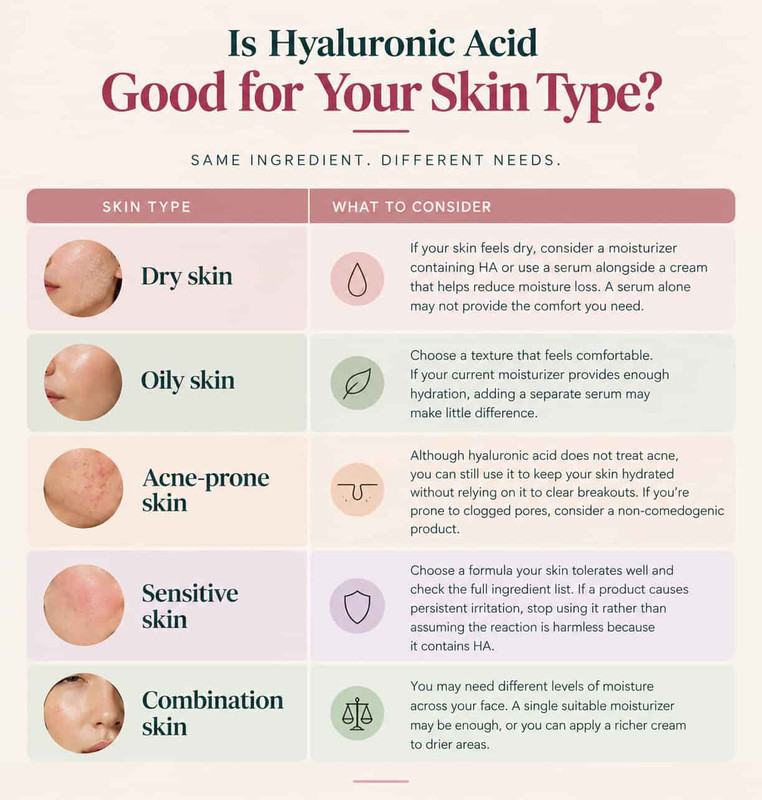
Is Hyaluronic Acid Good for Your Skin Type?
If you’re wondering whether hyaluronic acid is good for your skin type, consider your hydration needs and whether the product’s formula suits your skin. Your skin type can help guide your product choice, but it doesn’t automatically mean you need a separate HA serum.
Hyaluronic Acid Side Effects: Stickiness, Pilling and Irritation
Hyaluronic acid is generally well tolerated, but not every HA serum may feel comfortable on every skin type. You might notice a sticky finish, persistent tightness, or products pilling when layered together. These experiences don’t necessarily mean hyaluronic acid itself is the problem; the overall formula and the rest of your skincare routine can also affect how your skin responds.
Why Does Hyaluronic Acid Make My Skin Feel Dry or Sticky?
If your skin feels slightly tacky after applying a serum, the texture or amount of product may be the issue. Try using a smaller amount and see whether it layers better with your moisturizer.
If your skin stays dry or tight, look at your overall routine. Harsh cleansers, frequent exfoliation, or irritating active ingredients may contribute to dryness. Simplify your routine, use a gentle cleanser, and apply a moisturizer suited to your skin. If the HA product continues to leave your skin uncomfortable, consider switching to another formula.
Why Does Hyaluronic Acid Serum Pill?
Pilling occurs when products roll into little flakes or balls on the skin. The amount you apply, rubbing, and how products layer together may contribute. A 2024 study linked rubbing during application with increased pilling in the product combinations tested, but it did not specifically test HA serums.
If your serum pills, try using less and applying it gently. If the problem continues, change the product combination or try another formula.
Can Hyaluronic Acid Cause Irritation?
Burning, itching, redness, or swelling are different from ordinary stickiness or pilling. These symptoms may indicate irritation, a reaction to the product, including one of its other ingredients, or a damaged skin barrier.
If this happens, stop using the product rather than trying to push through the discomfort. Seek medical advice if symptoms persist or worsen. Although cosmetic hyaluronates have a reassuring safety assessment under the conditions evaluated, an individual product can still cause a reaction.
Read: What is skin barrier and barrier damage
Learn: 10 skincare mistakes that can lead to skin barrier damage
Key Takeaway
Hyaluronic acid can be a useful ingredient if your skin needs extra hydration, but its benefits depend on the product and how well it fits your routine. Before investing in a separate serum, check whether your existing moisturizer already contains hyaluronic acid or provides enough hydration on its own. A good skincare routine focuses on choosing products that meet your skin’s needs rather than simply following trends.
Read: A science-backed guide to glycerin and it’s benefits for your skin
FAQs
1. Can hyaluronic acid replace moisturizer?
No. Hyaluronic acid helps attract and retain water in the outer skin layers, while moisturizers can also contain ingredients that soften the skin and reduce moisture loss. An HA serum may complement your moisturizer by making your skin hydrated, plump, soft and supple, but it doesn’t automatically replace it.
2. What happens when you stop using hyaluronic acid?
Your skin won’t become dependent on hyaluronic acid. Any extra hydration and plumper appearance it provides may gradually fade when you stop using it, especially if your other skincare products don’t provide enough moisture.
3. Can you use hyaluronic acid under makeup?
Yes. Hyaluronic acid can help your skin feel hydrated under makeup. Allow the product to settle before applying makeup, and avoid using excessive amounts if you notice pilling.
4. Can you use hyaluronic acid around your eyes?
Generally, yes, if the product is suitable for the eye area and used according to its instructions. Hydration may temporarily soften the appearance of fine lines, but it won’t eliminate wrinkles. Avoid getting the product in your eyes.
5. Can hyaluronic acid improve uneven skin texture?
Hyaluronic acid may make rough or dehydrated skin look smoother by improving hydration. However, it isn’t a proven solution for every cause of uneven texture, such as acne scars or persistent bumps.
Found this article helpful? Share it with someone you care about.
Stay radiant! Catch you in the next article.
Read More:

What Does Hyaluronic Acid Do for Your Skin? A Science-Backed Guide to Hyaluronic Acid Benefits & Uses
A science-backed guide to what does hyaluronic acid do for your skin, its research-backed benefits,…
Is Glycerin Good for Skin? A Science-Backed Guide to Benefits, Uses & Side Effects
A science-backed guide answering “Is glycerin good for skin?” Explore glycerin benefits for skin, how…

Fall Makeup 2026: Trends, Colors & Easy Looks to Try
The fall makeup guide explores the latest 2026 trends, flattering autumn colors, and easy step-by-step…

Fall Skincare Routine for Glowing Skin: How to Keep Your Skin Hydrated
A practical fall skincare routine guide to building a routine for glowing skin, covering how…
How to Clean Makeup Brushes and Sponges: A Complete Guide 2026
A practical beginner’s guide to ‘how to clean makeup brushes and sponges,’ covering the right…
Why Does My Makeup Look Cakey, Patchy, Dry, or Separated? Here’s How To Avoid Cakey Makeup and Make Foundation Look Smooth
A complete makeup guide to ‘why does my makeup look cakey, ‘ breaking down common causes…
Explore Our Category
Skincare Insights
Discover the science behind healthy skin with science-backed insights on skincare ingredients, routines, and skin health.
Beauty Inside-out

Understand how nutrition, lifestyle, and wellness support healthy skin, stronger hair, and beauty from within.
Makeup Guide
Practical makeup guidance to help you choose products, improve application, and use cosmetics safely with confidence.