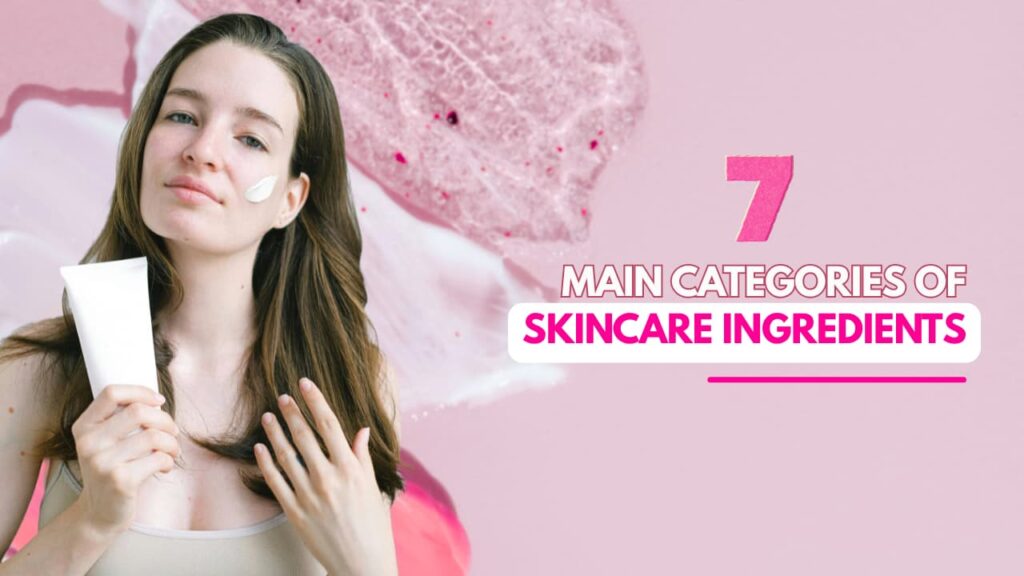
A science-backed skincare ingredients explained guide to help you learn what common skincare ingredients do, understand ingredient lists, and confidently choose the right products for your skin.
You pick up a serum bottle at the store. The packaging promises “glowing skin in 7 days,” and the price tag says $45. You buy it. You apply the serum consistently for two weeks, but nothing changes.
The truth is, every skincare product is defined by its ingredients. They’re what determine whether a product hydrates your skin, treats acne, fades dark spots, strengthens your skin barrier, or helps reduce signs of aging. Understanding what these ingredients do makes it easier to see past marketing claims and focus on products that are genuinely formulated for your skin’s needs.
With hundreds of trending products, viral ingredients, and bold marketing claims everywhere, it’s easy to feel overwhelmed. Most people choose skincare based on what the packaging promises rather than what’s actually in the bottle. Learning how to read an ingredient list helps you understand what you’re putting on your skin, compare products more confidently, and make informed choices based on ingredients rather than trends.
With an MPhil in Chemistry and years spent studying cosmetic formulations and ingredient science, my goal is to simplify the science behind skincare ingredients so you can make informed, confident skincare decisions based on evidence rather than marketing.
In this beginner-friendly skincare ingredients guide, you’ll learn:
- What the most common skincare ingredients are and what they actually do
- Which ingredients are best for different skin types and skin concerns
- How to read skincare ingredient lists with confidence
- Which ingredients work well together and which combinations to avoid
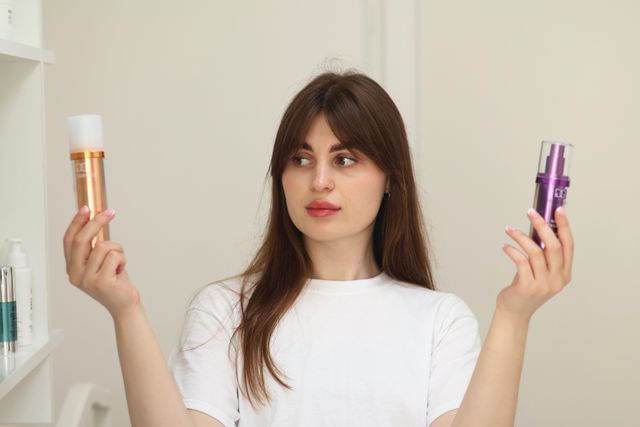
Let’s break down the science behind skincare ingredients so you can confidently choose products that truly work for your skin.
Skincare Ingredients Explained: What Are Skincare Ingredients?
Skincare ingredients are the substances that make up a skincare product and determine how it works on your skin. Every skincare product is made up of a combination of ingredients, and each one has a specific purpose.
Some ingredients help hydrate the skin; others support the skin barrier, target acne, fade hyperpigmentation, reduce signs of aging, or simply keep the product stable, safe, and effective over time. Together, they determine how a skincare product performs on your skin.
In simple terms, ingredients are what give a skincare product its purpose and effectiveness.
Active vs. Inactive Ingredients
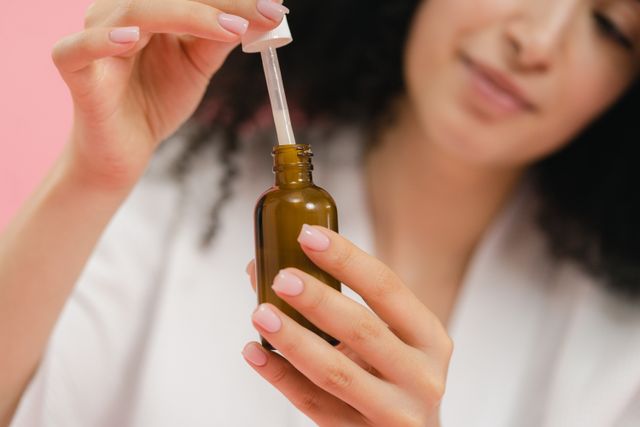
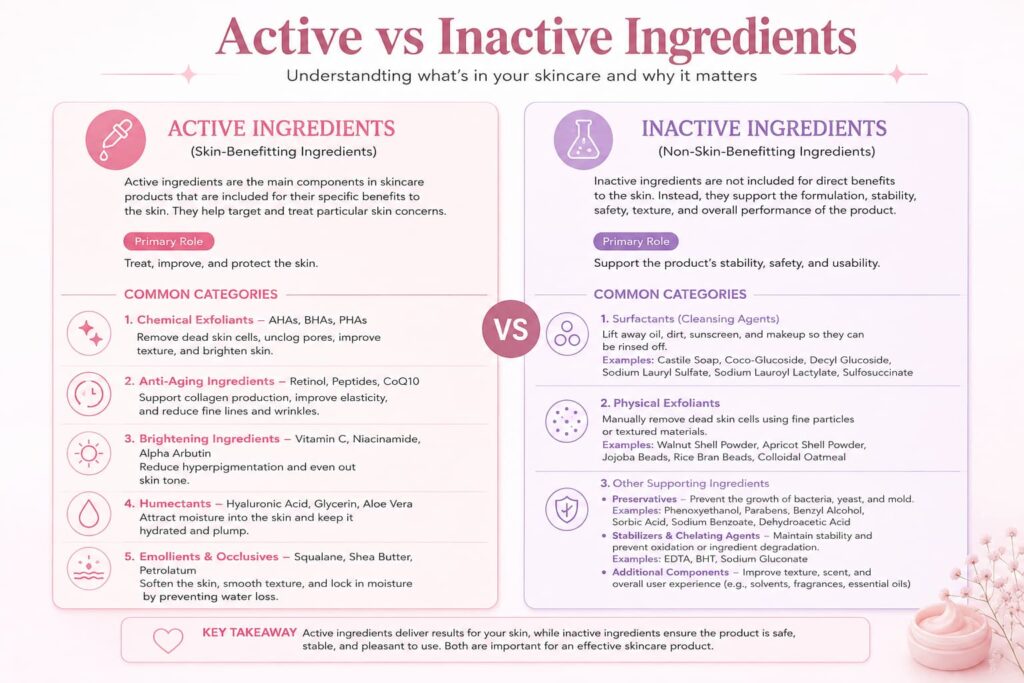
One of the easiest ways to understand skincare ingredients is to divide them into two broad groups: active ingredients and inactive (supporting) ingredients. Every skincare product contains a combination of both, and each plays an important role in how the product performs.
Active ingredients are the ingredients that directly target a skin concern such as acne, pigmentation, wrinkles, or dehydration. Inactive ingredients don’t directly treat the skin, but they help deliver, stabilize, preserve, hydrate, or improve the product’s texture. Both are essential because a product can’t perform well without a well-formulated base.
New to active ingredients? Learn how to use them safely without damaging your skin barrier.
7 Main Categories of Skincare Ingredients
Here is a simplified breakdown of the main categories of skincare ingredients.
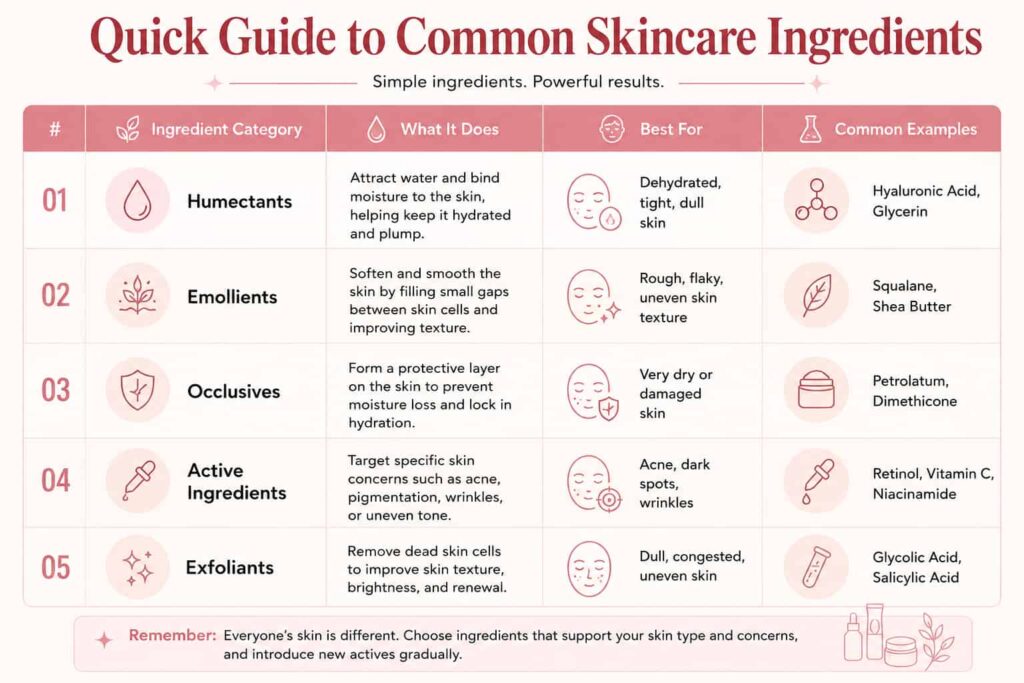
1. Active Ingredients
Active ingredients are the components that directly affect the skin, have beneficial effects, and target specific concerns such as acne, pigmentation, dehydration, or signs of aging.
They are called “active ingredients” because they produce a measurable biological effect on the skin, helping treat specific concerns rather than simply supporting the formula. These ingredients are responsible for most of the visible results in skincare products.
I. Chemical Exfoliants
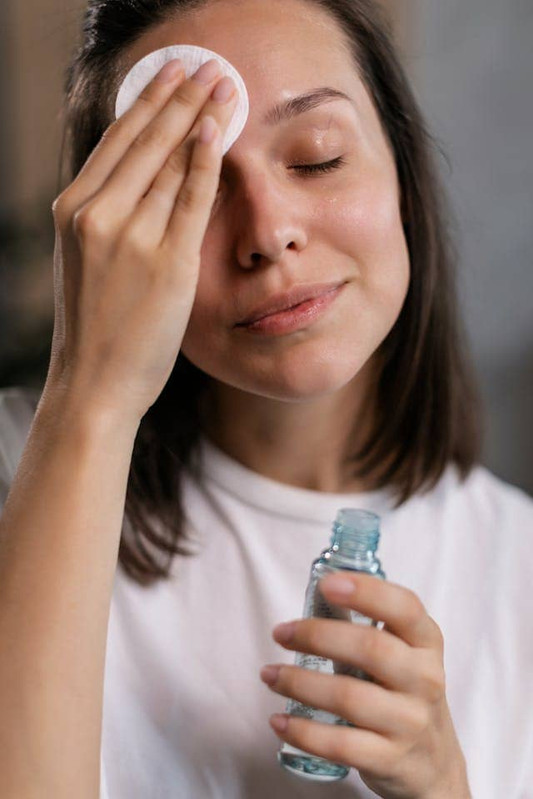
Chemical exfoliants are ingredients that gently dissolve the “glue” holding dead skin cells together, allowing them to shed naturally without the need for scrubbing. This helps remove the buildup of dead skin cells from the skin’s surface, revealing smoother, brighter, and healthier-looking skin. Regular exfoliation can also unclog pores, improve uneven texture, promote a more even skin tone, and enhance the absorption of other skincare products.
The two main types of chemical exfoliants are alpha hydroxy acids (AHAs) and beta hydroxy acids (BHAs).
Alpha Hydroxy Acids (AHAs)
AHAs are water-soluble acids that work primarily on the skin’s surface. They help remove dead skin cells, improve skin texture, brighten dull skin, and support a smoother, more even complexion. Research also shows that certain AHAs, such as glycolic acid and lactic acid, can stimulate collagen production and are commonly used to improve acne scars, hyperpigmentation, melasma, and signs of photoaging.
Beta Hydroxy Acids (BHAs)
BHAs are oil-soluble acids, allowing them to penetrate deeper into pores. The most well-known BHA is salicylic acid, which helps dissolve excess oil, unclog pores, reduce blackheads, and improve acne-prone skin.
When used appropriately or combined in well-formulated products, AHAs and BHAs can complement each other by exfoliating both the skin’s surface and inside the pores, helping improve overall skin texture and clarity.
Common examples of chemical exfoliants include:
- Glycolic acid (AHA): Removes dead skin cells and improves skin texture.
- Lactic acid (AHA): Gently exfoliates while providing mild hydration.
- Citric acid (AHA): Helps exfoliate and brighten the skin.
- Mandelic acid (AHA): A gentler exfoliating acid that is well suited for sensitive or acne-prone skin.
- Salicylic acid (BHA): Penetrates pores to dissolve excess oil and clear congestion.
II. Anti-Aging Ingredients
Anti-aging ingredients are skincare ingredients that help reduce visible signs of skin aging by supporting collagen production, improving skin elasticity, increasing skin cell turnover, and protecting the skin from environmental damage.
Well, anti-aging ingredients can’t stop the natural aging process. However, they can help improve the appearance of fine lines, wrinkles, uneven skin tone, and loss of firmness, leaving the skin looking smoother, healthier, and more youthful over time.
Common examples include:
- Retinol (Vitamin A): One of the most well-researched anti-aging ingredients. It stimulates collagen production, increases skin cell turnover, improves fine lines and wrinkles, refines skin texture, and helps fade post-inflammatory hyperpigmentation over time.
- Peptides: Short chains of amino acids that act as building blocks for proteins like collagen and elastin. They support the skin’s natural repair process, improve hydration, enhance firmness and elasticity, and help reduce the appearance of fine lines.
- Coenzyme Q10 (CoQ10): A naturally occurring antioxidant that helps protect skin cells from oxidative stress caused by UV exposure and pollution. It supports cellular energy production, helps reduce the appearance of wrinkles, and promotes healthier-looking skin.
- Bakuchiol: A plant-derived ingredient often considered a gentler alternative to retinol. It helps improve fine lines, uneven skin tone, and skin firmness while being less likely to cause irritation, making it suitable for many people with sensitive skin.

III. Antioxidants
Antioxidants are ingredients that help protect the skin from free radical damage caused by UV exposure and environmental stressors. They support overall skin health and can help reduce visible signs of premature aging.
Common examples include:
- Vitamin C — helps neutralize free radical damage caused by sun exposure and pollution, brightens the skin, and supports collagen production.
Vitamin E — protects the skin from oxidative damage and helps strengthen the skin barrier. - Vitamin A — supports skin cell turnover and helps improve skin texture and fine lines.
- Ferulic acid — boosts the stability and effectiveness of other antioxidants like vitamin C and vitamin E while protecting the skin from environmental damage.
- Resveratrol — helps defend the skin against environmental stress and supports overall skin health through its antioxidant properties.
Read 👉 The Science-Backed Guide to Vitamin C.
IV. Skin Brightening Ingredients
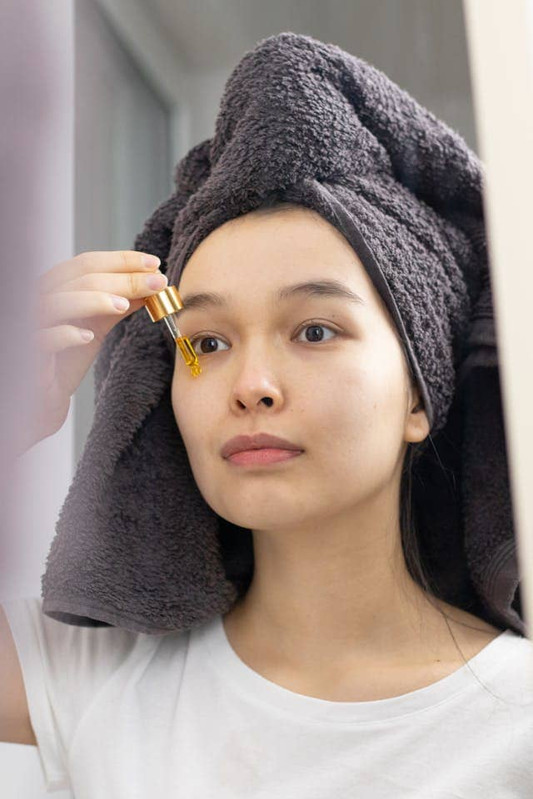
Brightening ingredients help reduce the appearance of hyperpigmentation, post-acne marks, melasma, and uneven skin tone by targeting different stages of melanin production or encouraging the skin’s natural renewal process. While results take time, consistent use combined with daily sunscreen can noticeably improve skin clarity and create a brighter, more even complexion.
Common examples include:
- Alpha Arbutin: Helps reduce hyperpigmentation by slowing down melanin production, making it effective for fading dark spots and improving uneven skin tone.
- Kojic Acid: Inhibits tyrosinase, the enzyme responsible for producing melanin, helping reduce the appearance of sunspots, acne marks, and other forms of pigmentation.
- Tranexamic Acid: Helps reduce stubborn discoloration, including melasma and post-inflammatory hyperpigmentation, by interrupting the pathways involved in excess melanin production.
- Vitamin C: A powerful antioxidant that brightens the skin, protects against free radical damage, and helps fade pigmentation by reducing excess melanin formation.
- Niacinamide (Vitamin B3): Helps improve uneven skin tone by reducing the transfer of melanin from pigment-producing cells to the surface of the skin while also strengthening the skin barrier.
- Vitamin A Derivatives (Retinoids): Increase skin cell turnover, helping pigmented skin cells shed more quickly and revealing a smoother, brighter, and more even complexion over time.
- Licorice Extract: Contains natural compounds that help calm inflammation while reducing the appearance of dark spots and uneven pigmentation, making it a gentle option for sensitive skin.
2. Humectants
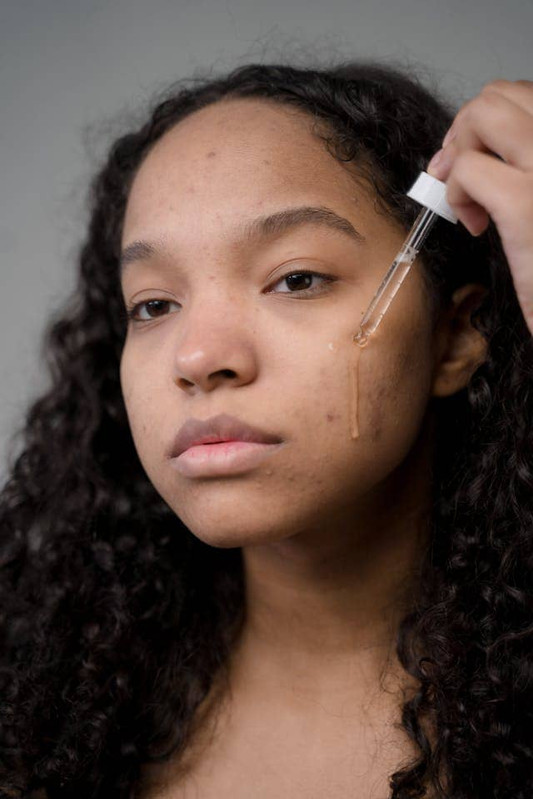
Humectants are water-binding ingredients that attract and retain moisture in the outer layer of the skin, helping keep it hydrated, soft, smooth, and plump. They play an important role in maintaining skin hydration and supporting a healthy skin barrier. For best results, humectants are often paired with emollients and occlusives, which help seal that moisture into the skin and reduce water loss.
Common examples include:
- Hyaluronic Acid: Draws water into the skin, providing long-lasting hydration and leaving the skin looking plumper and smoother.
- Glycerin: One of the most effective humectants, it attracts moisture from the environment and deeper layers of the skin to help maintain hydration and improve skin barrier function.
- Aloe Vera: Provides lightweight hydration while helping soothe irritation and calm sensitive or sun-exposed skin.
- Propylene Glycol: Attracts moisture to the skin while also improving the penetration and performance of other skincare ingredients.
- Butylene Glycol: Helps maintain skin hydration, improves the texture of skincare products, and enhances the absorption of active ingredients.
- Sorbitol: A naturally derived sugar alcohol that binds water to the skin, helping prevent dryness and maintain softness.
- Honey: A natural humectant that attracts moisture while also providing soothing and antioxidant benefits for the skin.
- Algae Extract: Rich in polysaccharides and minerals that help improve moisture retention and support long-lasting skin hydration.
Learn: Is Glycerin Good for Skin ( A science-backed guide)
3. Surfactants
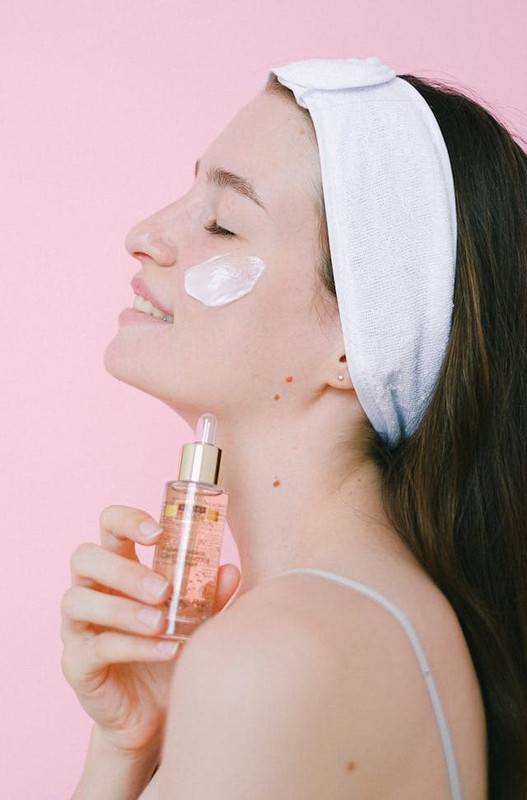
Surfactants are cleansing ingredients that help lift away oil, dirt, sweat, sunscreen, makeup, and other impurities from the skin so they can be easily rinsed away with water. They play an essential role in keeping the skin clean without leaving behind excess buildup. When used in well-formulated cleansers, surfactants effectively cleanse the skin while helping maintain its natural moisture balance.
Common examples include:
- Castile Soap: A plant-based cleansing ingredient commonly used in natural skincare products.
- Coco-Glucoside: A gentle, plant-derived surfactant that effectively cleanses without stripping the skin’s natural oils.
- Decyl Glucoside: A mild, non-irritating surfactant often found in cleansers designed for sensitive skin.
- Sodium Lauryl Sulfate (SLS): A highly effective cleansing agent that creates a rich lather. While it cleanses thoroughly, it may be too harsh for some people with dry or sensitive skin.
- Sodium Lauroyl Lactylate: A mild surfactant that helps cleanse the skin while also supporting hydration and improving the texture of skincare formulations.
- Sulfosuccinates: A group of gentle cleansing agents commonly used as milder alternatives to traditional sulfates, helping remove impurities without excessive stripping.
4. Physical Exfoliants
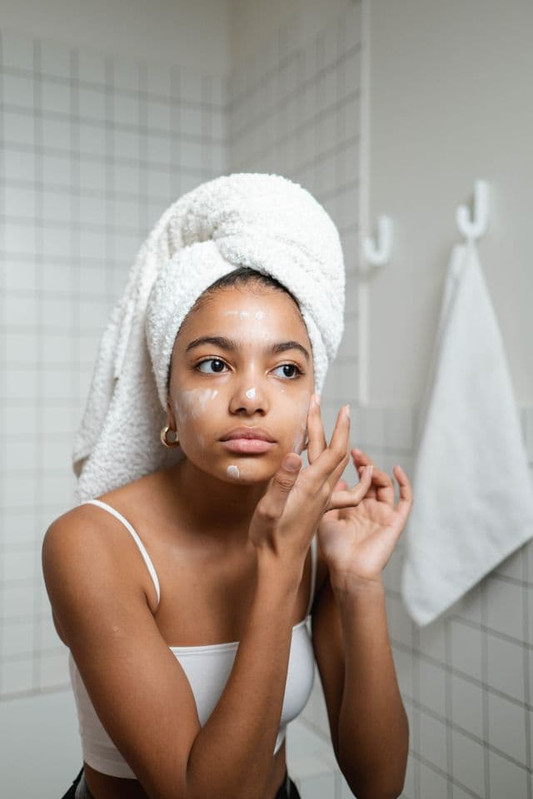
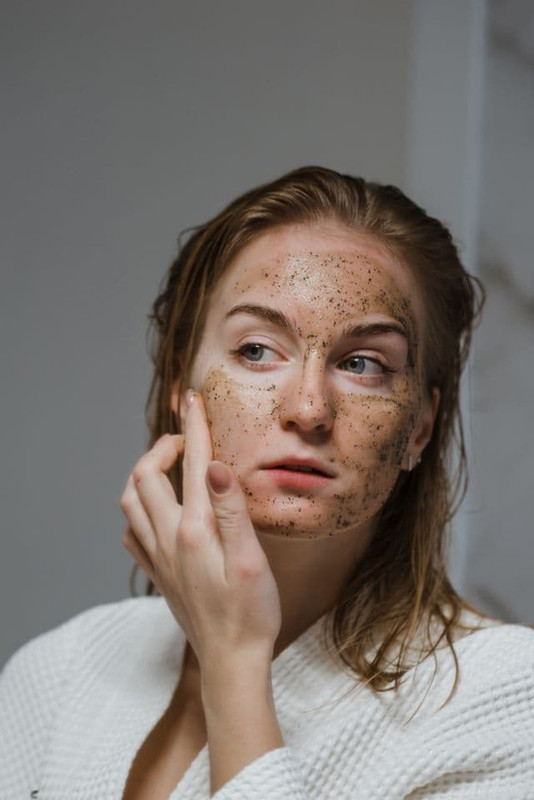
Physical exfoliants are ingredients that manually remove dead skin cells from the skin’s surface using fine particles or textured materials. They can instantly leave the skin feeling smoother and looking brighter by polishing away surface buildup. When used gently and in moderation, physical exfoliants can improve skin texture without disrupting the skin barrier.
Common examples include:
- Jojoba Beads: Smooth, biodegradable beads that gently buff away dead skin cells with minimal irritation, making them suitable for most skin types.
- Rice Bran Beads: Finely milled particles that provide gentle exfoliation while helping smooth rough, dull skin.
- Colloidal Oatmeal: Although best known for its soothing properties, finely ground oatmeal can also provide very mild physical exfoliation while helping calm sensitive skin.
- Walnut Shell Powder: A natural exfoliant that effectively removes dead skin cells but may be too abrasive for sensitive or compromised skin if used frequently.
- Apricot Shell Powder: A coarse exfoliating ingredient that helps polish the skin’s surface but should be used with caution, especially on sensitive or acne-prone skin, as excessive scrubbing may cause irritation.
5. Emollients
Emollients are skin-softening ingredients that smooth, nourish, and replenish the skin’s surface by filling the tiny gaps between skin cells. This helps strengthen the skin’s natural barrier, reduce roughness, and leave the skin feeling softer, smoother, and more comfortable. They are especially beneficial for dry, flaky, or irritated skin and are commonly found in moisturizers, creams, and lotions.
Common examples include:
- Shea Butter: A rich plant butter that deeply nourishes the skin, softens rough patches, and helps strengthen the skin barrier.
- Cocoa Butter: Forms a protective layer on the skin while improving softness and reducing dryness.
- Mango Butter: A lightweight plant butter that moisturizes, soothes, and helps improve skin elasticity.
- Squalane: A lightweight emollient that softens the skin, helps prevent moisture loss, and absorbs quickly without feeling greasy.
- Jojoba Oil and Other Plant Oils: Help replenish the skin’s natural lipids, improve softness, and support a healthy skin barrier.
- Silicone-Based Ingredients (e.g., Dimethicone): Create a smooth, silky feel on the skin while helping reduce moisture loss and improve the spreadability of skincare products.
- Cetyl Palmitate: A waxy emollient that softens the skin and gives creams and lotions a rich, smooth texture.
- Isopropyl Myristate: Improves skin softness while enhancing the spreadability and elegant feel of skincare formulations.
- Mineral Oil: A highly effective emollient that softens the skin and helps reduce moisture loss by forming a protective layer on the skin’s surface.
6. Occlusives
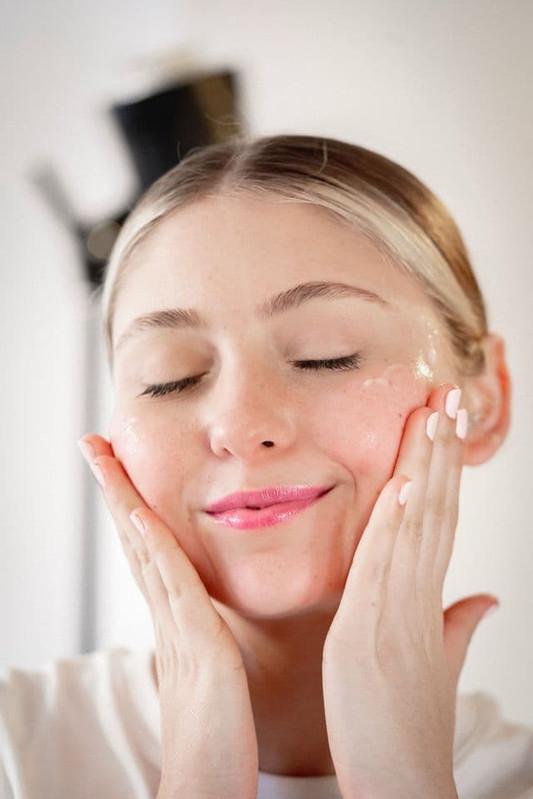
Occlusives are protective ingredients that form a barrier on the skin’s surface to reduce transepidermal water loss (TEWL) and lock in moisture. Unlike humectants, which attract water into the skin, occlusives help prevent that moisture from escaping. They’re especially beneficial for dry, dehydrated, or damaged skin and play an important role in supporting a healthy skin barrier.
Common examples include:
- Petrolatum: One of the most effective occlusive ingredients. It creates a protective barrier that significantly reduces water loss, helping repair and protect a compromised skin barrier.
- Beeswax: A natural occlusive that helps seal in moisture while also protecting the skin from external irritants.
- Dimethicone: A lightweight silicone that forms a breathable protective layer, helping reduce moisture loss without leaving the skin feeling heavy or greasy.
- Mineral Oil: A highly effective occlusive that locks in moisture, softens the skin, and helps protect the skin barrier by preventing excessive water loss.
7. Other Supporting Ingredients in Skincare Formulations
Some ingredients don’t have a direct benefit to the skin. But they are included primarily to maintain the stability, safety, and performance of the product.
I. Preservatives
Preservatives help prevent the growth of bacteria, yeast, and mold, making skincare products safe to use.
Common examples include:
- Phenoxyethanol
- Parabens
- Benzyl alcohol
- Sorbic acid
- Sodium benzoate
- Dehydroacetic acid
II. Stabilizers and Chelating Agents
These ingredients help maintain the stability of the formulation by preventing oxidation, discoloration, or ingredient degradation.
Common examples include:
- EDTA
- BHT
- Sodium gluconate
Additional components in skincare formulations may include:
- Solvents
- Fragrance ingredients
- Aroma compounds such as essential oils
These ingredients help improve product texture, scent, and usability, but do not directly benefit the skin.
Remember: An ingredient’s effectiveness depends on more than just its name. Factors like concentration, formulation, pH, ingredient stability, and delivery system all influence how well it performs.
How to Read a Skincare Ingredient List
Now that you’re familiar with the main categories of skincare ingredients, the next step is learning how to read an ingredient list. Understanding a few simple rules can help you evaluate products more confidently and choose formulas that are better suited to your skin.
- Ingredients are listed in descending order of concentration. The ingredients at the top of the list are present in the highest amounts, while those near the bottom are usually included in smaller quantities.
- Focus on the first 5–10 ingredients. They make up most of the formula and often determine how the product performs.
- Ingredients present at less than 1% typically appear near the end of the list. Although they’re used in smaller amounts, some can still be highly effective.
- Look at the complete formula, not just one ingredient. A product’s performance depends on how its ingredients work together, not on a single trending ingredient.
- Consider your skin’s needs first. The best ingredient list is one that matches your skin type and concerns, whether you’re looking for hydration, acne treatment, barrier repair, or brightening.
Once you know how to read skincare ingredient labels, choosing products becomes much less overwhelming and far more intentional.
What Skincare Ingredients Should You Look For?
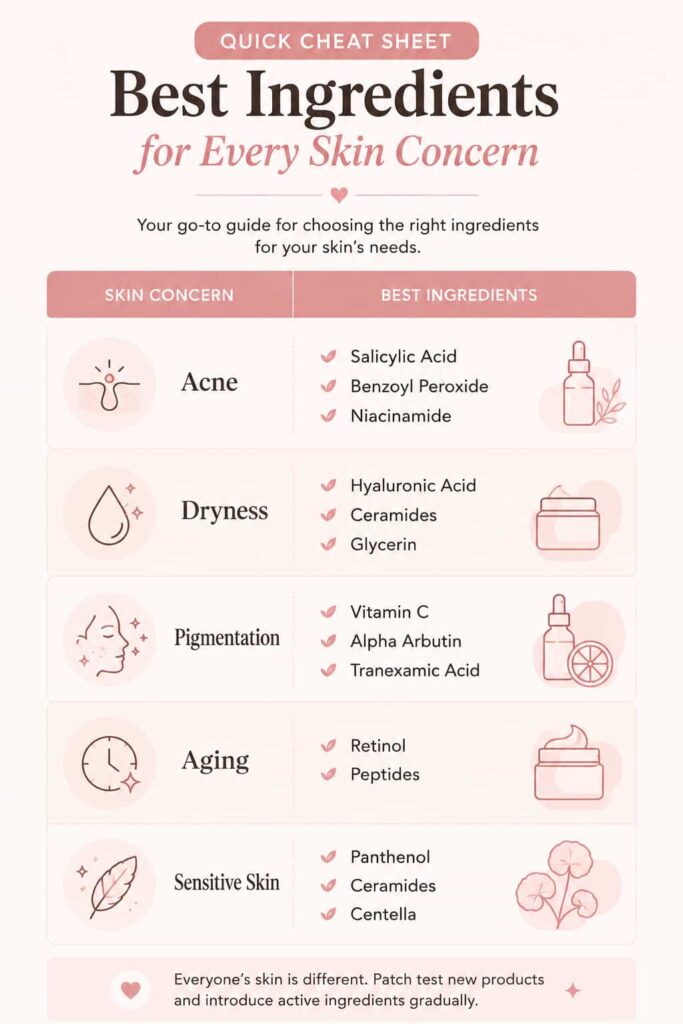
Before you start picking products, keep in mind that not every ingredient works the same for everyone. With so many skincare ingredients available today, it can be tempting to try multiple actives at once. However, most dermatology guidance suggests starting with a few well-researched ingredients and building a routine gradually.
The effectiveness of skincare ingredients often depends on your skin type and what your skin actually needs. It doesn’t matter if a product costs $45 or $100. If the ingredients aren’t suitable for your skin, you’re unlikely to see real benefits.
With that in mind, let’s take a closer look at which ingredients can work best for your skin type.
I. Dry Skin:
If you have dry skin, focus on ingredients that attract moisture, replenish the skin barrier, and reduce water loss.
Look for:
- Humectants: Hyaluronic acid, glycerin, aloe vera
- Emollients: Squalane, shea butter
- Occlusives: Petrolatum, dimethicone, beeswax
- Anti-aging ingredients: Peptides, CoQ10, low-strength retinol
- Antioxidants: Vitamin C, Vitamin E, ferulic acid
- Gentle exfoliants: Mandelic acid and lactic acid (1–2 times per week)
Avoid: Overusing strong exfoliating acids or high-strength active ingredients, as they can worsen dryness and irritation.
II. Oily or Acne-Prone Skin
If your skin is oily or acne-prone, choose ingredients that help regulate excess oil, unclog pores, and reduce breakouts without stripping the skin.
Look for:
- Chemical exfoliants: Salicylic acid (BHA), glycolic acid (AHA)
- Anti-acne ingredients: Retinoids, benzoyl peroxide, niacinamide
- Lightweight humectants: Glycerin, hyaluronic acid
- Antioxidants: Vitamin C, resveratrol
III. Sensitive Skin
Sensitive skin benefits from gentle, fragrance-free products that focus on calming irritation and strengthening the skin barrier.
Look for:
- Gentle exfoliants: Mandelic acid (if needed)
- Humectants: Aloe vera, glycerin, hyaluronic acid
- Barrier-supporting ingredients: Ceramides, niacinamide, panthenol
- Soothing ingredients: Centella asiatica, colloidal oatmeal, allantoin
Avoid: Strong acids, high-strength retinoids, harsh scrubs, and products containing added fragrance if your skin is easily irritated.
IV. Hyperpigmentation or Uneven Skin Tone
If your goal is to fade dark spots and achieve a more even complexion, look for ingredients that reduce excess melanin production while supporting healthy skin renewal.
Look For:
- Brightening ingredients: Vitamin C, niacinamide, alpha arbutin, kojic acid, tranexamic acid, licorice extract
- Vitamin A derivatives: Retinoids
- Chemical exfoliants: Glycolic acid and lactic acid
- Antioxidants: Vitamin C, Vitamin E, ferulic acid
V. Mature or Aging Skin
As skin matures, it naturally loses collagen, elasticity, and moisture. Prioritize ingredients that support collagen production, improve firmness, and maintain hydration.
Look for:
- Anti-aging ingredients: Retinol, peptides, CoQ10
- Antioxidants: Vitamin C, Vitamin E, ferulic acid, resveratrol
- Humectants: Hyaluronic acid, glycerin
- Emollients: Squalane, shea butter
Want to build the perfect routine? Read my Beginner Skincare Routine According to Your Skin Type to discover which products and ingredients your skin actually needs.
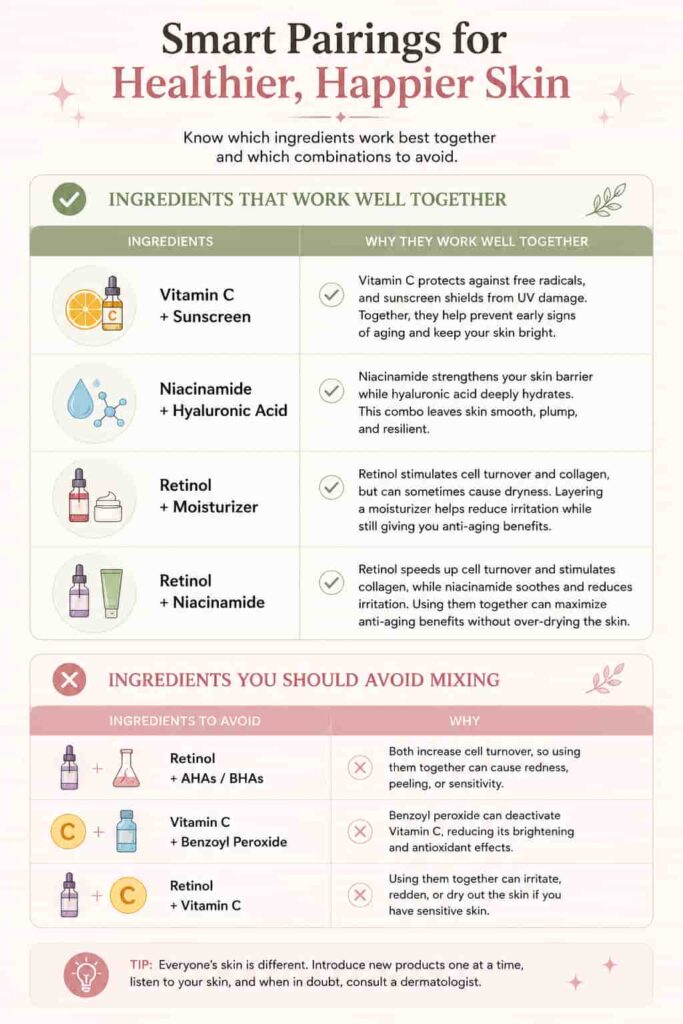
Skincare Ingredients That Work Well Together
Some ingredients complement each other beautifully, boosting their benefits when used together. Such as:
- Vitamin C + Sunscreen– Vitamin C protects against free radicals, and sunscreen shields from UV damage. Together, they help prevent early signs of aging and keep your skin bright.
- Niacinamide + Hyaluronic Acid- Niacinamide strengthens your skin barrier while hyaluronic acid deeply hydrates. This combo leaves skin smooth, plump, and resilient.
- Retinol + Moisturizer-Retinol stimulates cell turnover and collagen, but can sometimes cause dryness. Layering a moisturizer helps reduce irritation while still giving you anti-aging benefits.
- Retinol + Niacinamide – Retinol speeds up cell turnover and stimulates collagen, while niacinamide soothes and reduces irritation. Using them together can maximize anti-aging benefits without over-drying the skin.
Skincare Ingredients You Should Avoid Mixing
On the other hand, some ingredient combinations can irritate your skin or reduce the effectiveness of each other. Therefore, avoid these pairs:
- Retinol + AHAs/BHAs– Both increase cell turnover, so using them together can cause redness, peeling, or sensitivity.
- Vitamin C + Benzoyl Peroxide– Benzoyl peroxide can deactivate Vitamin C, rRetinol + Vitamin Cening and antioxidant effects.
- Retinol+ vitamin C- Using them together can irritate, redden, or dry out the skin if you have sensitive skin.
Skincare Ingredients Beginners Should Use Carefully
Some ingredients are very effective but require careful introduction, especially if you’re new to skincare:
- Retinoids — Start slow: 0.1- 2 times per week. Use a lower concentration (0.1- 0.3%) and gradually increase frequency.
- High-percentage acids — Strong AHAs/BHlower-strengthe skin if used too frequently. Use lower strength acids only 1-2 times a week.
- Fragrance & Essential Oils — Can cause sensitivity or allergic reactions in some people
Final Takeaway
Understanding skincare ingredients explained in this guide is honestly the first and most important step toward a routine that actually works for your skin. You don’t need expensive products or a complicated routine. You just need the right ingredients for your specific skin concerns, used consistently and safely. When in doubt, start simple, patch test everything new, and give your skin the time it needs to respond.
Learn More: 10 Skincare Mistakes To Avoid that can Damage your Skin Barrier.
Learn More: Easy 3-Step Beginner’s Skincare Routine for All Skin Types (AM/PM)
FAQs
1. What does “Skincare with active ingredients” mean?
Active ingredients are the components in a skincare product that directly target specific skin concerns such as acne, wrinkles, pigmentation, or dehydration. These ingredients actively work on the skin to deliver visible results. Examples include retinol, salicylic acid, vitamin C, and niacinamide.
2. Why is it important to understand skincare ingredients?
Most people spend a lot of money on skincare without ever really knowing what’s inside the products they’re buying. Understanding skincare ingredients helps you choose products that are actually suited to your skin and avoid combinations that could irritate or damage it. Instead of relying on marketing claims, you can evaluate ingredient lists and select formulas that deliver real benefits.
3. Can skincare ingredients be mixed?
Some skincare ingredients work well together and enhance each other’s benefits, while others can cause irritation or reduce effectiveness. For example, niacinamide pairs well with hyaluronic acid, while combining retinol with strong exfoliating acids may irritate the skin.
4. How do I know which skincare ingredients are right for my skin type?
Firstly, identify your skin type and your main concern. Whether you are dealing with dryness, acne, pigmentation, or early signs of aging. Each concern has a set of ingredients that work best for it. Once you know what your skin actually needs, choosing the right ingredients becomes much more straightforward and less overwhelming.
5. How long does it take for skincare ingredients to show results?
It depends on the ingredient and the concern. Hydrating ingredients like hyaluronic acid can show results within days, while actives like retinol or vitamin C for pigmentation typically take 8 to 12 weeks of consistent use to show visible improvement.
6. Are natural skincare ingredients better than synthetic ones?
Not necessarily. What matters is whether an ingredient is effective and safe for your skin. Some of the most well-researched and gentle ingredients in skincare are lab-made, while some natural ingredients can cause irritation or allergic reactions. Both natural and synthetic ingredients can work well for the skin when properly formulated and suitable for your skin type.
Found this article helpful? Share it with someone you care about.
Stay radiant! Catch you in the next article.
Continue Reading
What Does Hyaluronic Acid Do for Your Skin? A Science-Backed Guide to Hyaluronic Acid Benefits & Uses
A science-backed guide to what does hyaluronic acid do for your skin, its research-backed benefits,…
Is Glycerin Good for Skin? A Science-Backed Guide to Benefits, Uses & Side Effects
A science-backed guide answering “Is glycerin good for skin?” Explore glycerin benefits for skin, how…

Fall Makeup 2026: Trends, Colors & Easy Looks to Try
The fall makeup guide explores the latest 2026 trends, flattering autumn colors, and easy step-by-step…
Fall Skincare Routine for Glowing Skin: How to Keep Your Skin Hydrated
A practical fall skincare routine guide to building a routine for glowing skin, covering how…
How to Clean Makeup Brushes and Sponges: A Complete Guide 2026
A practical beginner’s guide to ‘how to clean makeup brushes and sponges,’ covering the right…
Why Does My Makeup Look Cakey, Patchy, Dry, or Separated? Here’s How To Avoid Cakey Makeup and Make Foundation Look Smooth
A complete makeup guide to ‘why does my makeup look cakey, ‘ breaking down common causes…
Explore Other Categories
Skincare Insights
Discover the science behind healthy skin with science-backed insights on skincare ingredients, routines, and skin health.
Beauty Inside-out
.png)
Understand how nutrition, lifestyle, and wellness support healthy skin, stronger hair, and beauty from within.
Makeup Guide

Practical makeup guidance to help you choose products, improve application, and use cosmetics safely with confidence.
Pingback: Is Vitamin C Good For The Skin? The Complete Guide To Its Benefits, Uses & How It Works (2026)
Pingback: Essential Skin Barrier Repair Routine: 3 Phases To Restore Your Skin Barrier
Pingback: What Causes A Damaged Skin Barrier? 10 Skincare Mistakes To Avoid.
Pingback: Easy 3-Step Beginner Skincare Routine For Every Skin Type
Pingback: Simple Fall Skincare Routine For Glowing Skin (2026) | Skin Alchemy
Pingback: Is Glycerin Good For Skin? A Complete Science-Backed Guide To Benefits, Uses & Side Effects
Pingback: What Does Hyaluronic Acid Do For Your Skin? An Easy Science-Backed Guide To Hyaluronic Acid Benefits & Uses