

A step-by-step skin barrier repair guide covering the right morning and evening skincare routine for each phase of healing, what to use, when to reintroduce active ingredients, and long-term maintenance tips after it has healed.
Is your skin getting worse the more you try to fix it? You’ve added vitamin C, glycolic acid, or retinol to your routine, hoping for brighter, smoother, healthier skin. Instead, you’re dealing with redness, irritation, dehydration, flaky patches, or even more breakouts than before.
If that sounds familiar, you’re in the right place. The real issue is that your skin barrier is damaged. When your barrier is compromised, even the best skincare products can do more harm than good. Well, repairing your skin barrier doesn’t require a complicated routine or a shelf full of active ingredients.
In this guide, you’ll learn a simple skin barrier repair routine divided into three easy phases. We’ll walk through exactly what to use in your morning and evening routine, when to reintroduce active ingredients safely, and how to strengthen your skin barrier for long-term healthy, resilient skin.
Read more: Skin Barrier Damage 101- Why does your skin suddenly sting or irritate?
- The only skin barrier repair products you need
- 1. Gentle Cleanser- to remove impurities and dirt
- 2. Hydrating serum – to rehydrate the skin
- 3. Moisturizer – to nourish the skin
- 4. Occlusive – seals moisture and strengthens the skin barrier.
- 5. ZnO cream (baby's diaper rash cream) – calms inflammation, protects, and repairs the skin barrier.
- 6. Sunscreen – to protect against UV damage
- Phase 1: Heal Skin Barrier
- Phase 2- Rehydrate and restore skin barrier
- Phase 3: Reintroduce actives & rebuild skin barrier protection skincare routine
- Key Takeaway
- FAQs
- 1. How can I protect my skin barrier during seasonal changes?
- 2. How do I build a skincare routine to protect my skin barrier?
- 3. Should I stop exfoliating when repairing my skin barrier?
- 4. Is sunscreen necessary when healing a skin barrier?
- 5. Best moisturizers for repairing the skin barrier?
- 6. How long does it take for skin barrier repair products to work?
- Read other Posts
- Explore our categories
Quick Glow-up Summary
- You don’t need more skincare products to repair your skin barrier. You need the right ones. A gentle cleanser, moisturizer, and an occlusive are enough to help it recover.
- Your skin needs different care as it heals. Start by calming irritation, then focus on deep hydration, and only introduce active ingredients once your skin feels comfortable again.
- Don’t start all your active ingredients at once after your skin heals. Introduce one ingredient at a time, use a low strength, and give your skin a few rest days before adding another.
- If your skin still feels tight, stings when you apply products, or looks red and irritated, it’s a sign your barrier needs more healing before you move on to treatments.
- Once your barrier is healthy again, keep using barrier-supporting products alongside your treatments to prevent the same problem from happening again.
The only skin barrier repair products you need
Skin barrier repair doesn’t need a shelf full of products. Instead, you only need 2-5 products. Here’s an overview of the products. Later, we will learn to incorporate these products into different phases of your barrier-repairing journey.
1. Gentle Cleanser– to remove impurities and dirt
You need a gentle cleanser for a damaged skin barrier that removes impurities and dirt without stripping the skin’s natural oil. Opt for a cleanser that’s:
- Non-foaming
- Non stripping
- Acidic; has a low pH (4-5)
- Fragrance free
- Gel or cream-based
- Not active-ingredient based
- According to skin type

2. Hydrating serum – to rehydrate the skin
You simply need a hydrating element to help your parched skin recover. Use a hydrating, skin-barrier-soothing serum to deeply hydrate the skin. Look for hydrating ingredients such as hyaluronic acid, glycerin, panthenol, urea, etc.
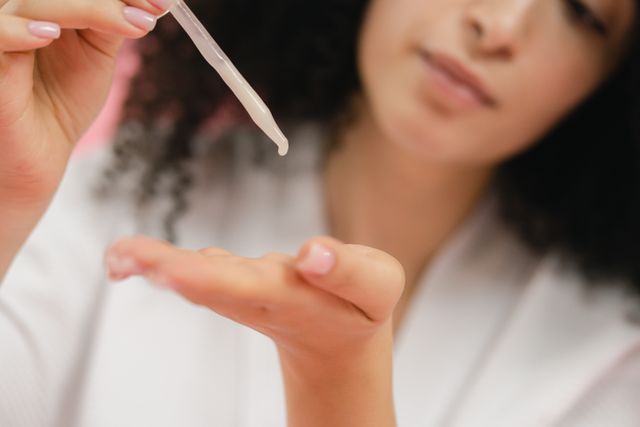
3. Moisturizer – to nourish the skin
A richer moisturizer helps the skin barrier repair faster. Look for a moisturizer that’s:
- Lightweight,
- Hydrating,
- Nourishing, and
- Contains barrier-strengthening lipids (like cholesterol, ceramides, linoleic acids)
Skincare products containing ceramides can help repair and strengthen the skin barrier while improving its ability to retain moisture. A review published in Skin Pharmacology and Physiology identified ceramides as one of the most important lipids for a healthy skin barrier. That’s why it’s worth incorporating a ceramide-based moisturizer into your skincare routine.

4. Occlusive – seals moisture and strengthens the skin barrier.
Occlusives are the most important and effective product in skin barrier repair. They make a protective layer on the skin surface that prevents moisture loss. Consider it like putting a lid on a glass of water to prevent evaporation.
One of the best and most dermatologically recommended, trusted, and loved occlusives is petroleum jelly. Petroleum jelly supports skin barrier recovery by reducing transepidermal water loss (TEWL) and creating the ideal conditions for the skin’s natural repair process. It’s affordable and widely available in stores, or you might already have it at home or in your vanity.
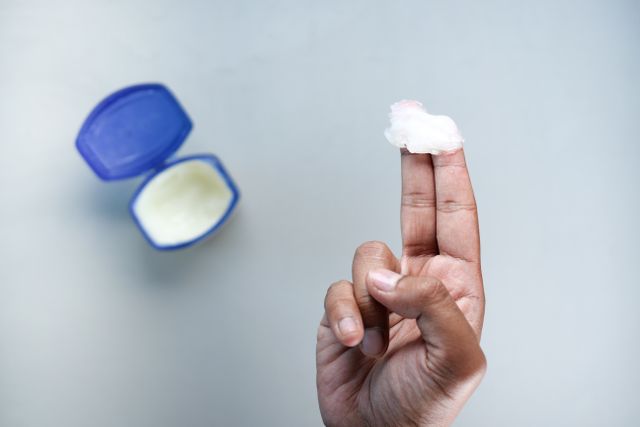
5. ZnO cream (baby’s diaper rash cream) – calms inflammation, protects, and repairs the skin barrier.
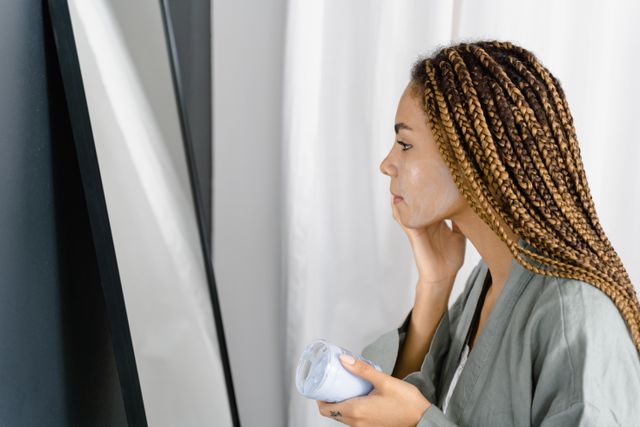
Baby’s diaper rash cream? Sounds a little unexpected, right? But it can be surprisingly effective for repairing a damaged skin barrier. These creams are formulated to protect and repair a baby’s delicate skin, making them gentle, safe, and suitable for adults with irritated or compromised skin as well.
Most diaper rash creams contain 10–40% zinc oxide (ZnO), a physical skin protectant that forms a protective barrier on the skin’s surface. It helps reduce transepidermal water loss (TEWL), protects the skin from irritants and allergens, calms inflammation, and supports the skin’s natural barrier repair process. That’s why dermatologists often recommend zinc oxide for irritated, inflamed, or compromised skin.
6. Sunscreen – to protect against UV damage
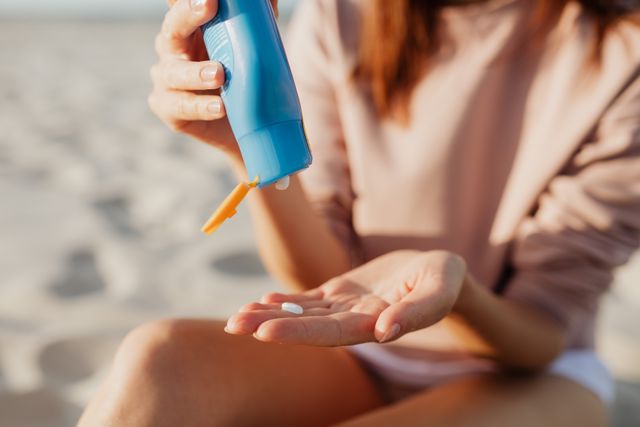
Sunscreen will not directly repair the skin barrier. However, it will protect the skin barrier from further UV damage. Choose sunscreen that’s:
- Broad-spectrum SPF 30–50 sunscreen
- Mineral-based, as they are often gentler (especially for people with sensitive skin)
Read more: How to Repair Skin Barrier- A science-backed guide to healthy skin.
Read more: What Causes A Damaged Skin Barrier? 10 Skincare Mistakes To Avoid.
Now, let’s delve into the skin barrier repair routine.
Phase 1: Heal Skin Barrier
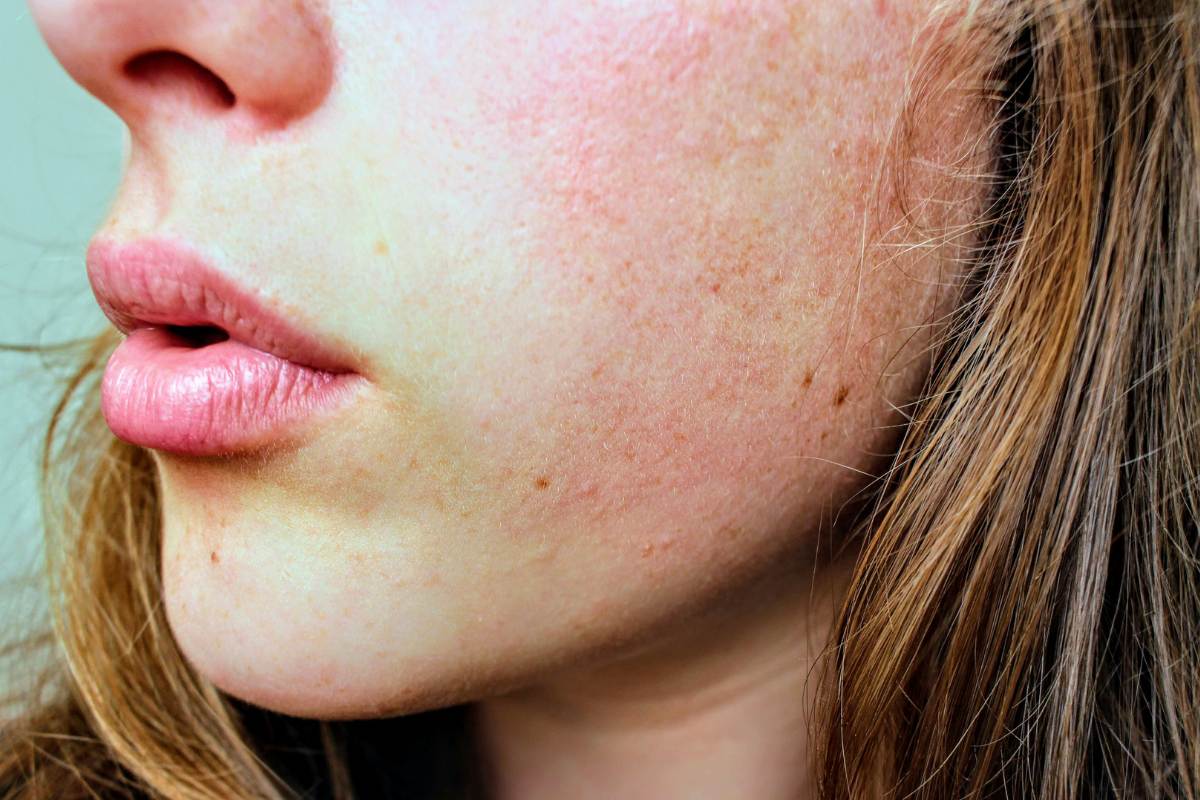
Phase one will mainly focus on skin barrier healing. As your skin barrier is stressed, we need to calm the skin and help it heal naturally.
Goal: To balance, soothe, and calm irritated skin.
Duration: 2-7 days
Skincare Ingredients: Soothing and anti-inflammatory
Main focus: Soothing irritated skin, calming redness, and healing the skin barrier
Skincare routine for damaged skin barrier (PM)
Your skin naturally repairs itself overnight. This nighttime routine is designed to calm irritation and redness while supporting your skin barrier healing.
Step 1- Cleansing the face
- Dampen the skin, then gently massage the cleanser to remove impurities and dirt.
- Rinse your face with lukewarm water.
- Gently pat dry the skin.
Step 2- Moisturize the skin
- Apply a coin-sized amount of moisturiser to slightly damp skin
- Gently massage the moisturiser into the skin.
Step 3- Final step (treatment)
- Apply a thin layer of petroleum jelly or ZnO cream on the skin.
- This is the final and main repairing step of the skincare routine.
- ZnO/petroleum jelly will effectively soothe the compromised barrier while you sleep.
Pro Tip: If you are prone to closed comedones or clogged pores, skip petroleum jelly and use ZnO cream instead.
Skincare routine for damaged skin barrier (AM)
Unlike your nighttime routine, the morning routine focuses more on protecting your skin rather than repairing it.
Step 1- Cleansing the face with a gentle cleanser (optional)
- You can skip this step in the morning, especially if you have dry or sensitive skin.
- Instead, refresh your skin with lukewarm water.
Gently splash your face 2–3 times with water, and massage it into your skin. - After that, gently pat your skin dry with a tissue or clean face towel.
Step 2- Apply moisturizer
- Apply moisturizer to damp skin.
Pro Tip: Skip sunscreen for 2-3 days, as it can irritate the skin or cause breakouts. If possible, avoid sun exposure or cover the face with a scarf or hat. However, you can apply a thin layer of petroleum jelly or ZnO cream.
And that’s it for Phase 1! Keep your routine simple and let your skin do the healing. Most people notice less redness and irritation within a few days, but if your skin barrier is severely damaged, recovery may take 5–7 days. Once your skin feels calm again, you can move on to Phase 2.
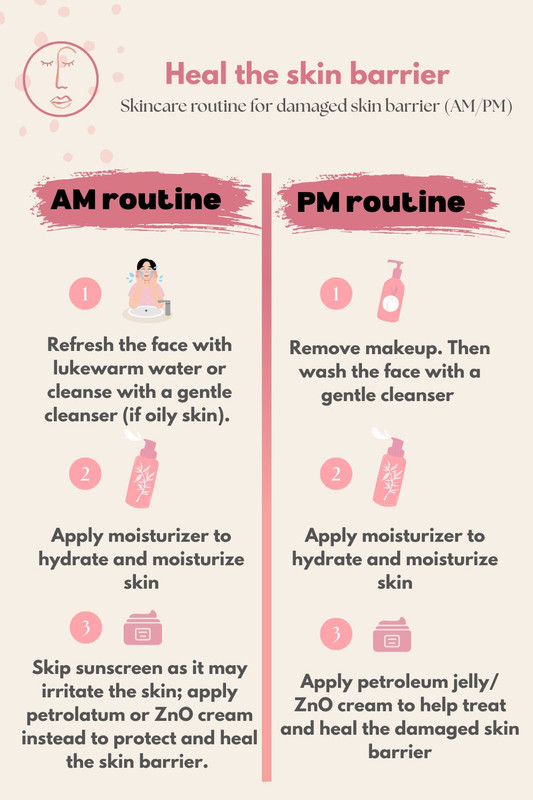
Skincare routine to heal your skin barrier.
Read More 👉 Easy 3-step Beginner Skincare Routine For All Skin Types (AM/PM)
Phase 2- Rehydrate and restore skin barrier
By now, your skin should feel calmer, with less redness and irritation. Now it’s time to focus on restoring hydration and rebuilding a stronger skin barrier so your skin can hold onto moisture and better protect itself. Therefore, we’ll add a hydrating serum in this phase.
Goal: Hydration, moisturization, and rebuilding a resilient skin barrier.
Duration:1-2 weeks
Skincare products: those that deeply hydrate, moisturize, actively repair, and soothe the skin barrier
Main focus: Building the lipid glue back that holds skin cells together to retain moisture, prevent water loss, and block irritants.

Skin barrier repair routine (AM)
The morning routine is all about protecting your skin from further damage and keeping it hydrated throughout the day.
Step 1- Cleansing the face (optional)
- You can use a gentle cleanser or just splash lukewarm water 2-3 times to refresh the skin.
- Gently pat the skin with a towel or tissue paper.
Step 2- Apply hydrating serum
- Take a few drops of serum into your palm.
- Apply the serum to slightly damp skin.
- Then gently massage it to penetrate the skin.
Step 3- Moisturise the skin
- Apply a layer of moisturizer to lock in hydration and moisturise the skin.
Step 4- Apply Sunscreen
- Apply sunscreen using the 2-finger rule
- Spread the sunscreen evenly on the face using gentle outward strokes.
- Pat it lightly to help it absorb into the skin.
- Avoid rubbing harshly.
- Apply at least 15-20 minutes before going outdoors.
Skin barrier repair routine (PM)
Your nighttime routine now focuses on restoring hydration and strengthening the skin barrier while you sleep.
Step 1- Cleansing the face
- Wash the face by gently massaging cleanser into the skin to remove sebum and dirt.
- Pat your skin Dry.
Step 2- Hydrating serum
- Apply 2-3 drops of serum to slightly damp skin.
- Gently absorb it into the skin.
Step 3: Apply moisturizer
- Gently massage the moisturizer into the skin.
Step 4: Occlusive seal
- End your nighttime skincare routine with petroleum jelly or ZnO.
- Apply a thin layer all over your face so it doesn’t feel heavy.
- The occlusive layer will preserve hydration and moisturization all night and repair the skin barrier.
After 1 week, you will feel your skin has become softer and more supple. By the end of this phase, you will notice hydrated, calmer, and stronger skin.
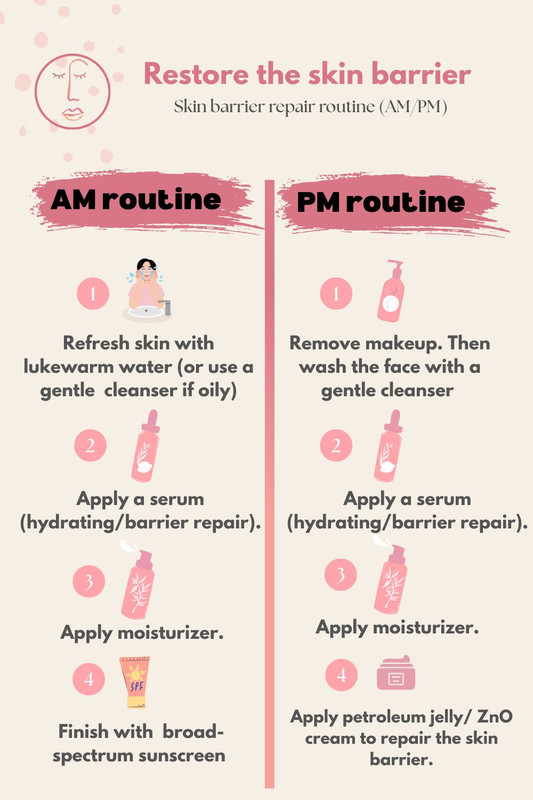
Skincare routine to restore your skin’s hydration.
Phase 3: Reintroduce actives & rebuild skin barrier protection skincare routine
Once your skin barrier has recovered, you can finally start treating concerns like acne, pigmentation, fine lines, or dullness again. The key is to introduce active ingredients slowly, so your barrier stays healthy while your skin adjusts.
Actives for Different Skin Concerns :
Dry, rough, & dehydrated skin: Niacinamide (2-5%), Glycerin, Hyaluronic acid, panthenol, squalane, ceramide, or urea.
Acne & breakouts: Azelaic acid or BHA (salicylic acid, 0.5-1%).
Clogged pores & textured skin: Niacinamide (2-5%), Azelaic acid, mandelic acid (AHA, 5-10%), lactic acid ( AHA, 5%), or BHA (salicylic acid, 0.5-1%).
Fine lines, wrinkles, or aging skin: retinoids (low-strength) and peptides.
Dark Spots, pigmentation, Dull & uneven skin tone: vitamin C, Niacinamide (2-5%), Azelaic acid (5%), or lactic acid ( AHA, 5%).
Sensitive skin: Niacinamide (low %), azelaic acid, Centella asiatica, panthenol, or allantoin.
New to skincare? Read the Beginner’s Guide to Skincare Ingredients and learn the 7 essential categories every skincare routine is built on.
Important Things to Remember When Introducing Actives
Here are a few tips you must follow while reintroducing actives into your skincare routine. Following these simple tips will help you get the most out of your skincare without stressing your skin barrier again.
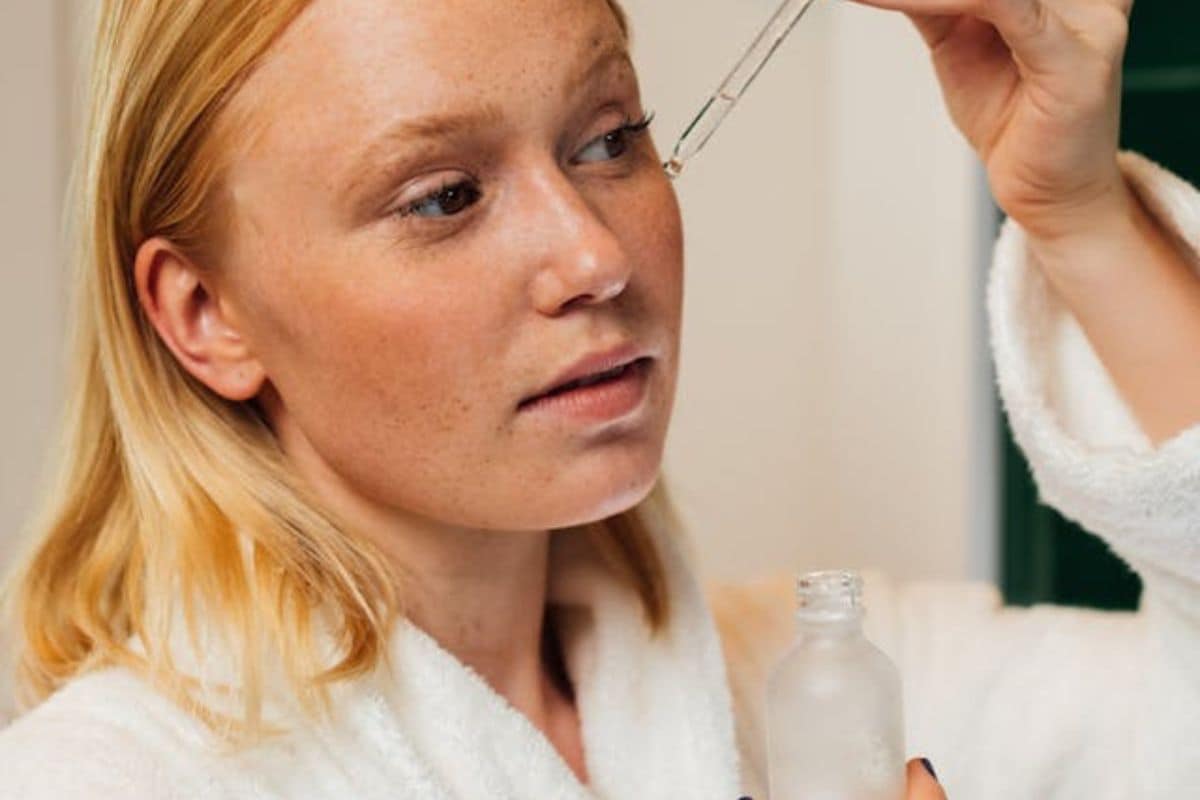
1. Build a Routine With Purpose
- Slowly build a skincare routine that targets skin issues
- Identify your skin concerns and address them one by one.
- Focus on one concern at a time, not all at once.
- Using too many actives at once will overload and stress the skin barrier again.
2. Start Slow and Stay Gentle
- Start with gentle, hydrating actives like niacinamide (5%) or azelaic acid.
- Use low-strength or mild exfoliating acids, such as mandelic acid or lactic acid.
- If using retinoids, apply only once a week initially.
3. Patch Test Before Full Use
- Always patch test before using any active ingredient.
- Apply it to one side of the face for one night, and to the other side the next night.
- If your skin stays calm or you feel mild tingling, it is acceptable.
- However, persistent tingling or strong irritation means you should stop immediately.
4. Choose Antioxidants
- Use antioxidants like vitamin C & E in the morning to deal with free radical (ROS) damage.
- Avoid ascorbic acid, as it is stronger and can feel harsh and irritating.
- Instead, use tetrahexyldecyl ascorbate (a milder derivative of vitamin C).
5. Use barrier-supporting ingredients
- This includes ingredients such as glycerin, hyaluronic acid, panthenol, squalane, Centella asiatica, and niacinamide.
- You can use them daily.
- They are gentler and support the skin barrier.
6. Use Exfoliating Acids Carefully
- Look for exfoliating products that also contain ceramides and humectants to support the barrier.
- Use exfoliating acids once a week or once every 2 weeks.
- Increase the frequency gradually once your skin starts tolerating it.
- If your skin is extremely sensitive, exfoliate only once a month or use mild exfoliating acids.
- Avoid stronger exfoliating acids like salicylic acid or glycolic acid and use gentler exfoliants like mandelic acid or PHAs.
7. Target skin issues one by one
- Let your skin adjust to one active before introducing the next.
- Apply one active ingredient at a time.
8. Follow the Active + Rest Days cycle
- Keep 2–3 rest days between activities.
- This prevents the barrier from feeling stressed or overloaded again.
9. Sunscreen Is Mandatory With Actives
- Never skip sunscreen after using actives.
- Active ingredients make your skin more sensitive to UV damage.
These tips will help you treat your skin concerns without compromising your skin barrier. Now, let’s put everything into practice with a simple morning and evening skincare routine.
Skin barrier protection skincare routine (AM)
The morning skincare will focus on protection and hydration.
Step 1: Cleanse the face with a gentle cleanser or refresh with lukewarm water
Step 2: Apply serum to slightly damp skin. You can use a hydrating, antioxidant, or azelaic acid serum.
Step 3: Apply the moisturizer afterwards.
Step 4: Finish the morning skincare with broad-spectrum sunscreen.
Skin barrier protection skincare routine (PM)
The nighttime skincare will target your skin concerns and skin barrier protection.
Step 1: Cleanse your face with a gentle cleanser to remove impurities and dirt.
Step 2: Apply hydrating serum (optional, if skin feels dry and stretched)
Step 3: Apply your chosen skin treatment (retinol / glycolic acid / salicylic acid / azelaic acid, etc.).
- Follow this step only on an active night
- Active nights: odd days of the week
- Rest days: even days of the week
- On rest days, skip this treatment step and follow the rest of your routine
Step 5: Apply moisturizer
Step 6: Occlusive seal (optional)
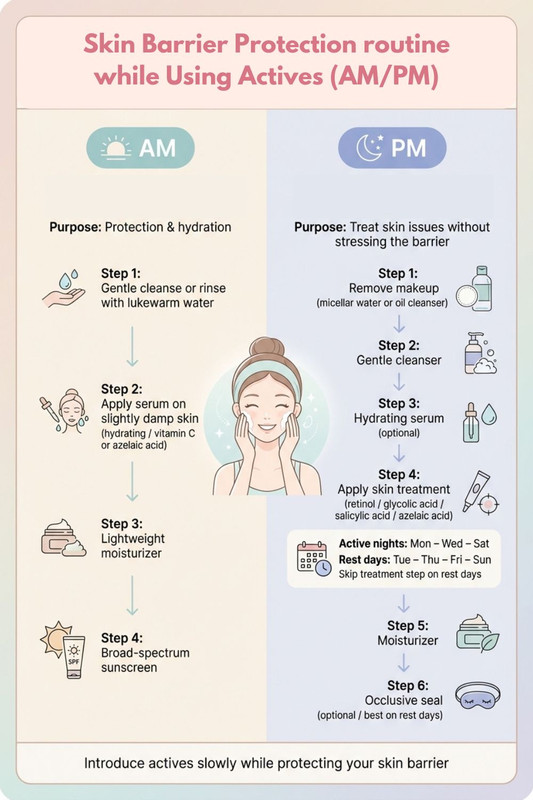
Skincare routine to protect your skin barrier while targeting your skin’s concerns.
Key Takeaway
A strong skin barrier is the foundation of healthy, glowing skin. The best skin barrier repair routine is one that evolves with your skin’s needs. Give your skin enough time to heal and restore itself, and only then move forward to include actives again in your skincare routine. Stay consistent, trust the process, and you’ll build a stronger, healthier, and more resilient skin barrier for the long run.
Check out 👉 10 Skincare Mistakes To Avoid That Damage Your Skin Barrier.
Check out 👉 Beginner Skincare Routine: Easy 3-Step Routine for All Skin Types (AM/PM)
FAQs
1. How can I protect my skin barrier during seasonal changes?
Adjust your skincare routine before the weather changes, not after your skin becomes irritated. In hot, humid weather, use a lightweight moisturizer and sunscreen to protect skin from UV damage. During colder months, switch to a richer moisturizer and reduce exfoliation if your skin feels dry. Between seasons, keep your routine simple and avoid overusing active ingredients so your skin can adapt easily.
2. How do I build a skincare routine to protect my skin barrier?
A skin barrier repair skincare routine should be intentional and minimal. Start with the basics: a gentle cleanser, a moisturizer, and broad-spectrum sunscreen. Include barrier-supporting ingredients such as ceramides, glycerin, or panthenol to keep your skin strong. You can also use ZnO cream or petrolatum as the last step in the nighttime routine. Most importantly, adjust your routine to your skin’s needs instead of following every skincare trend.
3. Should I stop exfoliating when repairing my skin barrier?
Yes. If your skin barrier is damaged, it’s best to stop using exfoliants until your skin has healed. When your barrier is already compromised, exfoliation can delay healing, increase irritation and sensitivity, and cause additional surface irritation—especially with harsh, gritty scrubs. Once your skin feels calm and comfortable again, gradually reintroduce a gentle exfoliant, such as mandelic acid or a PHA, starting with once a week—or once every two weeks if you have sensitive skin.
4. Is sunscreen necessary when healing a skin barrier?
Yes. Daily sunscreen helps protect your healing skin from UV damage, which can worsen inflammation and slow skin barrier repair. Choose a broad-spectrum SPF 30 or higher and apply it every morning, even on cloudy days. If your skin is very sensitive, opt for a fragrance-free sunscreen formulated for sensitive skin.
5. Best moisturizers for repairing the skin barrier?
The best moisturizer for skin barrier repair is the one that contains barrier-supporting ingredients like ceramides, cholesterol, fatty acids, glycerin, panthenol, or colloidal oatmeal. These ingredients help restore moisture, strengthen the skin barrier, and reduce dryness and irritation. Choose a richer cream if your skin is very dry, or a lightweight lotion if you have oily or combination skin.
6. How long does it take for skin barrier repair products to work?
Most people notice less redness, irritation, and dryness within a few days of using the right skin barrier repair products. However, a severely damaged skin barrier can take several weeks to fully recover, depending on the extent of the damage and how consistent you are with your skincare routine. The key is to stay patient and avoid introducing active ingredients too soon.
Found this article helpful? Share it with someone you care about.
Stay radiant! Catch you in the next article.
Read other Posts

What Does Hyaluronic Acid Do for Your Skin? A Science-Backed Guide to Hyaluronic Acid Benefits & Uses
A science-backed guide to what does hyaluronic acid do for your skin, its research-backed benefits,…

Is Glycerin Good for Skin? A Science-Backed Guide to Benefits, Uses & Side Effects
A science-backed guide answering “Is glycerin good for skin?” Explore glycerin benefits for skin, how…

Fall Makeup 2026: Trends, Colors & Easy Looks to Try
The fall makeup guide explores the latest 2026 trends, flattering autumn colors, and easy step-by-step…

Fall Skincare Routine for Glowing Skin: How to Keep Your Skin Hydrated
A practical fall skincare routine guide to building a routine for glowing skin, covering how…
How to Clean Makeup Brushes and Sponges: A Complete Guide 2026
A practical beginner’s guide to ‘how to clean makeup brushes and sponges,’ covering the right…

Why Does My Makeup Look Cakey, Patchy, Dry, or Separated? Here’s How To Avoid Cakey Makeup and Make Foundation Look Smooth
A complete makeup guide to ‘why does my makeup look cakey, ‘ breaking down common causes…
Explore our categories
Skincare Insights
Discover the science behind healthy skin with science-backed insights on skincare ingredients, routines, and skin health.
Beauty Inside-out
.png)
Understand how nutrition, lifestyle, and wellness support healthy skin, stronger hair, and beauty from within.
Makeup Guide

Practical makeup guidance to help you choose products, improve application, and use cosmetics safely with confidence.
Pingback: Skincare Ingredients Explained: A Complete Guide (2026)
Pingback: Easy 3-Step Beginner Skincare Routine For Every Skin Type
Pingback: How To Repair Skin Barrier: A Complete 10-Step Science-Backed Guide
Pingback: Simple Fall Skincare Routine For Glowing Skin (2026) | Skin Alchemy
Pingback: Skin Barrier Damage 101: Why Your Skin Suddenly Stings
Pingback: What Does Hyaluronic Acid Do For Your Skin? An Easy Science-Backed Guide To Hyaluronic Acid Benefits & Uses