

The makeup for beginners guide explains which products you actually need, how to choose formulas and shades for your skin type, and how to build a practical first makeup kit with confidence.
Starting your makeup journey can feel overwhelming, especially when you’re searching for makeup for beginners and don’t know what products you actually need to buy first.
With social media recommending everything from primers and full-coverage foundations to skin tints and BB creams, building a simple makeup kit can quickly feel more complicated than it needs to be.
I know because I’ve been there. I bought products simply because everyone else seemed to have them—some I barely used, and others I didn’t even know how to use. Over time, I realized I didn’t need more makeup; I needed to understand what each product does, who actually needs it, and what works for my skin and routine.
With years of experimenting with makeup, learning from professional makeup artists, and using my Chemistry background to better understand cosmetic formulations, I created the beginner makeup guide I wish I’d had when building my first makeup kit.
By the end of this guide, you’ll know exactly how to:
- Build your first beginner makeup kit without buying everything at once.
- Understand what each product does and which ones you can skip.
- Choose formulas and shades that suit your skin and everyday needs.
- Know where to invest, where to save, and what beginner mistakes to avoid.
- Shop more confidently instead of simply following trends.
- What Makeup Should Beginners Buy First?
- Beginner Makeup Essentials: The Products You Actually Need
- Build Your First Makeup Kit Step by Step
- How to Choose Makeup Products for Your Skin Type
- How to Test Makeup Like a Professional
- Common Makeup Shopping Mistakes Beginners Make
- Final Thoughts
- FAQs
- Read More
- Explore Our Categories
What Makeup Should Beginners Buy First?
One thing I noticed while researching advice from professional makeup artists is that they rarely recommend buying everything at once when building a beginner makeup kit. In fact, the basic makeup items for beginners are just a handful of versatile products built around your needs, skin type, and routine.
When deciding what makeup items are best for beginners, ask yourself these four questions:
- Will I actually use it regularly?
- Is it easy enough for me to use as a beginner?
- Can I use it for more than one type of look?
- Does it solve a real need, or do I just want it because it’s trending?
If the answer is “no” to most of these questions, it’s probably a product that can wait.
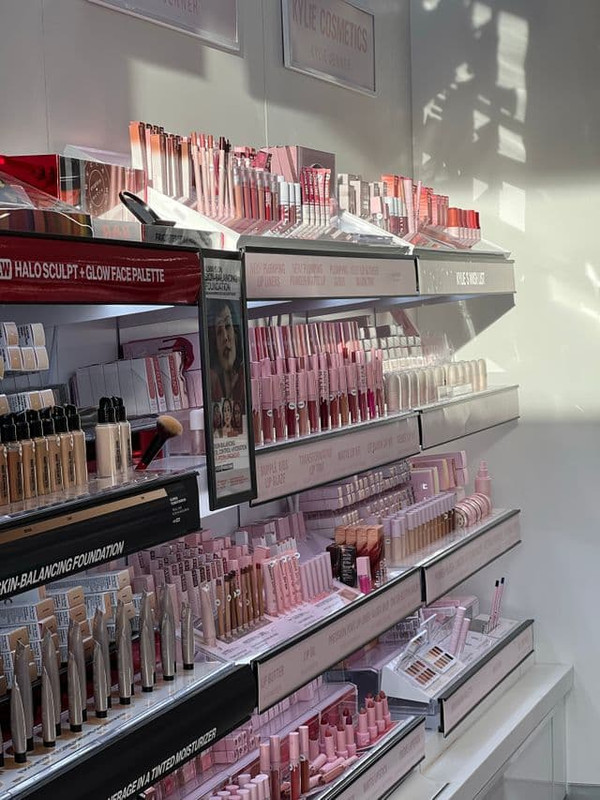
Beginner Makeup Essentials: The Products You Actually Need
Before you start shopping, it’s important to understand what each product does, whether you actually need it, and which makeup essentials for beginners deserve a place in your first makeup bag. Let’s go through the basic makeup products for beginners, what they’re best for, and how to choose the right beginner-friendly option with confidence.
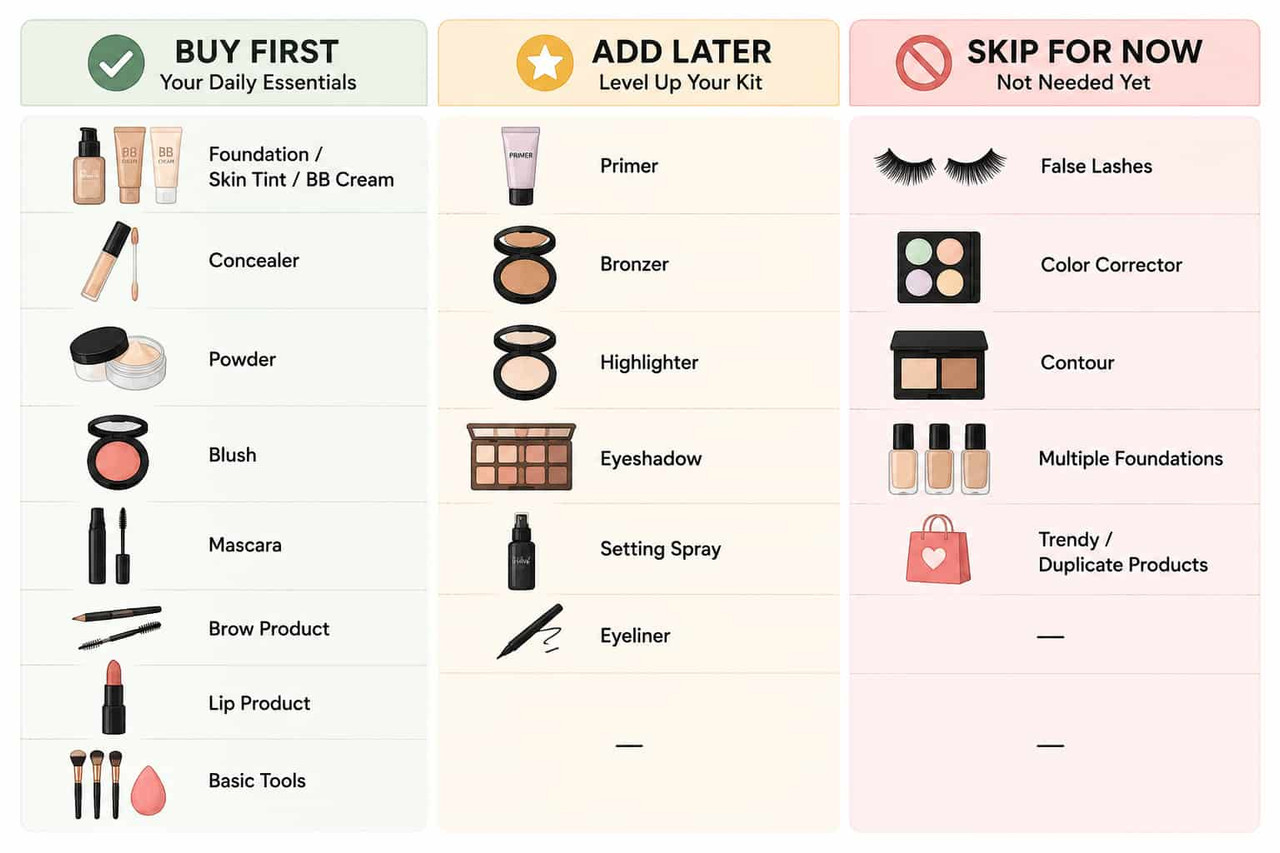
Let’s understand the basic makeup products for beginners.
1. Foundation, Skin Tint, BB Cream, or Tinted Moisturizer
For many beginners, choosing a base is one of the first confusing decisions when figuring out what makeup to buy as a beginner. These products may look similar, but they’re designed for different needs.
Choosing the right one depends on how much coverage you want, how comfortable you are wearing makeup, and how much of your natural skin you’d like to show through.
| Product | Coverage | Best for |
| Foundation | Medium–full | More even, polished coverage |
| Skin Tint | Light–medium | Natural, everyday makeup |
| BB Cream | Light | Quick, simple coverage |
| Tinted Moisturizer | Sheer | Fresh, barely-there makeup |
Which should you choose?
- Foundation: Choose it if you want more coverage for redness, pigmentation, or acne marks.
- Skin Tint: Great if you want your natural skin and texture to show through.
- BB Cream: A good beginner option when you want something quick and lightweight.
- Tinted Moisturizer: Best when your skin tone is already fairly even, and you mainly want a little freshness and hydration.
Beginner Tip:
Many professional makeup artists recommend that beginners start with sheer to medium-coverage formulas. They’re easier to blend, more forgiving if your shade isn’t a perfect match, and allow your natural skin to show through instead of masking it. Therefore, if you are completely new to makeup, a skin tint or BB cream can be an easier starting point.

Read: How to avoid cakey makeup and get a flawless base makeup.
2. Concealer
If I had to recommend just one complexion product for most beginners, it would be a concealer. It’s one of the most versatile makeup products you can own. For beginners, spot-concealing is an easy way to create a natural-looking base while using less product.
Unlike foundation, which evens out your overall skin tone. Concealer gives targeted coverage for dark circles, blemishes, redness, acne marks, or pigmentation, without covering your entire face.

Choose a concealer close to your skin tone for blemishes and spot concealing. If you want more brightness under the eyes, you can try a slightly lighter shade later, or a darker one if you need color correcting.
3. Powder
Powder helps set makeup, reduce excess shine, and keep cream products like foundation and concealer in place for longer. But you don’t need to powder your entire face or use heavy baking.
Which type should beginners choose?
- Loose powder: Best for setting makeup and controlling shine.
- Pressed powder: Convenient for quick touch-ups throughout the day.
- Translucent powder: Sets makeup without adding noticeable coverage or changing your foundation shade.
What to look for: A finely milled powder that feels lightweight and blends easily into the skin.

4. Blush
Blush adds warmth, dimension, and a healthy-looking flush to your complexion. After applying foundation or concealer, your face can sometimes look flat or one-dimensional. A touch of blush helps bring life and freshness back to the skin.
Blush usually comes in these three formulations
- Cream blush: Blends into the skin for a fresh, skin-like finish; especially nice for dry or normal skin.
- Powder blush: Easy to build and generally more long-wearing, making it a practical choice for oily skin.
- Liquid blush: Lightweight and highly blendable, giving a fresh, natural-looking flush that can be built from sheer to more noticeable color.
As a beginner, you can choose cream blush for everyday makeup because it melts into the skin and creates a more natural-looking flush. Powder blush is often chosen when you need longer wear or extra oil control.

5. Mascara
Mascara is one of the easiest ways to define your eyes and make your lashes look more lifted and noticeable without complicated eye makeup.
Mascara mainly comes in two types, and the better choice depends on how you plan to wear it:
- Washable mascara: This is the regular, water-based type that’s easier to remove at the end of the day, making it a comfortable choice for everyday wear and beginners.
- Waterproof mascara: Designed to resist water, sweat, and humidity, so it’s useful for long days or lashes that struggle to hold a curl—but it usually takes more effort to remove.
Besides the formulation of the mascara, the wand also makes a difference:
- Slim wand: Gives you more control and helps separate individual lashes.
- Fluffy wand: Picks up more lashes at once to create a fuller, more voluminous look.
- Curved wand: Helps lift and emphasize your lashes’ natural curl.
Beginners can start with a washable mascara and a slim or medium-sized wand as it’s easier to control, remove, and get comfortable with.

6. Brow Product
Brows help frame your face and make your overall makeup look more polished. You don’t need several products—one is enough to start.
Choose based on what your brows need:
- Brow Pencil: Best for filling sparse areas and creating natural, hair-like strokes.
- Tinted Brow Gel: Great if your brows are already full and mainly need color and hold.
- Brow Powder: Gives a softer, diffused look and works well for fuller brows.
Go for a shade that looks close to your natural brow color. If you’re unsure, slightly lighter is usually safer than going too dark, as overly dark brows can look harsh.
If you’re new to doing your brows, start with a tinted brow gel. It can quickly groom, shape, and add subtle definition without requiring you to master brow filling or shaping. Once you’re comfortable, you can add a pencil for sparse areas if needed.

7. Lip Product
You don’t need a whole collection of lip products to start. One comfortable, everyday option that suits your style can take you surprisingly far.
Choose the formula and finish you enjoy:
- Tinted Lip Balm: Adds sheer color with a comfortable, moisturizing feel—great for an effortless everyday look.
- Lip Oil: Gives lightweight color or shine with a soft, glossy finish.
- Lip Gloss: Adds noticeable shine and can be worn alone or layered over lipstick.
- Lipstick: Mainly comes in cream/satin and matte finishes. Cream or satin formulas feel more comfortable and forgiving, while matte formulas give more defined, longer-lasting color.
- Lip Pencil: Defines the lip shape and helps lipstick apply more neatly. Choose one close to your natural lip color or your lipstick shade.
If you’re unsure where to start, choose a tinted lip balm or a creamy lipstick in a shade close to your natural lip color. Both are easy to wear and more forgiving than very bold shades.
These are the basic makeup products for beginners that can help you create a simple, practical, and versatile makeup kit.
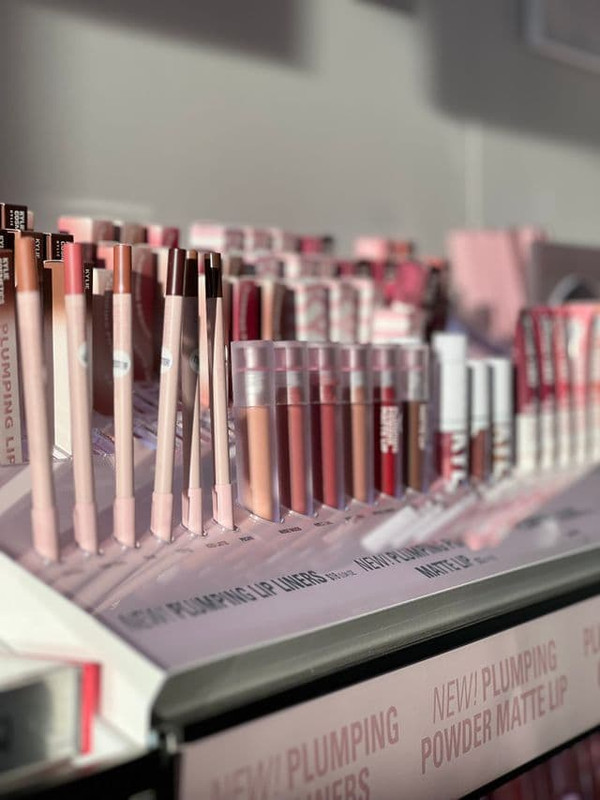
Other Makeup Products You Can Buy Later
Once you’re comfortable with the basics, you can add other makeup products based on the looks you enjoy and the specific needs you want to address.
Primer
Choose based on your concern:
- Mattifying: Helps control oil.
- Hydrating: Helps makeup sit more comfortably on dry skin.
- Blurring: Softens the appearance of pores and texture.
- Gripping: Helps makeup stay in place longer.

Bronzer
Adds warmth and dimension to the face.
- Cream: Fresh, skin-like finish; easy to build.
- Powder: Easy to layer and generally longer-wearing.
Choose a shade only 1–2 shades deeper than your skin tone, with a soft warm or neutral undertone.

Highlighter
Adds glow to the high points of the face.
- Liquid/Cream: Softer, more skin-like glow.
- Powder: More noticeable and generally longer-wearing.
Start with a finely milled, subtle formula rather than chunky glitter.

Setting Spray
Helps makeup come together and last longer, depending on the formula.
- Dewy: Adds a fresh, radiant finish.
- Matte: Helps reduce shine.
- Long-wear: Useful for long days or special occasions.

Eyeshadow
Adds depth and definition to the eyes.
- Powder: Easy to blend and beginner-friendly.
- Cream: Quick to apply, often with your fingers.
One versatile neutral palette is more useful than several trendy ones.

Eyeliner
Defines the eyes and can change how they appear.
- Pencil: Easiest and most forgiving.
- Gel: More precise and long-wearing.
- Liquid: Sharpest finish but requires more practice.
Start with a softly smudged brown or black pencil.

Contour
Creates shadow and definition, unlike bronzer, which adds warmth. It’s completely fine to skip contour until you’re comfortable with blush and bronzer.

Color Corrector
Helps neutralize persistent discoloration before concealer. Most beginners can skip it unless concealer alone isn’t enough.

Makeup Tools Every Beginner Needs
The right tools can make makeup easier to apply, but you don’t need a brush for every product when building a basic makeup kit for beginners. For most beginners, four or five quality tools are more than enough.
Start with these essentials:
- Beauty Sponge: Blend foundation, skin tint, BB cream, and concealer.
- Powder Brush: Apply loose or pressed powder evenly.
- Blush Brush: Perfect for blush, and it can also be used for bronzer.
- Eyeshadow Brush: A fluffy blending brush is enough for most everyday eye looks.
- Brow Spoolie or Dual-Ended Brow Brush: Brush brows into place and blend brow products for a more natural finish.
Learn: How to clean your makeup brushes and sponges at home

Read: How To Apply Makeup Step-by-Step as a Beginner.
Build Your First Makeup Kit Step by Step
As a beginner, you don’t need to buy an entire makeup kit at once. This will lead to confusion, impulse purchases, and products you’ll rarely use.
Let’s build your first makeup kit for beginners step by step, starting with the products you’ll actually need. As you begin building your everyday kit, you can add a few versatile beginner makeup essentials, including:
- Concealer
- Mascara
- Blush
- Lip product
- Powder (if you need extra shine control or setting)
- Brow product (if your brows need definition)
These are enough to create a simple, polished everyday look without a full face of makeup. Once you’re comfortable with the basics, decide whether you actually want a base. At this point, you can add Skin tint, BB cream, tinted moisturizer, or foundation. You can choose one based on your preferred coverage and finish.
After you’ve mastered the basics, you can add products based on the makeup looks you enjoy and what you want your routine to do:
- Eyeshadow → if you enjoy eye makeup
- Bronzer → if you want more warmth and dimension
- Highlighter → if you like a glowy finish
- Eyeliner → if you want more eye definition
- Primer or setting spray → if you need better wear or a specific finish
- False lashes → mainly for special occasions
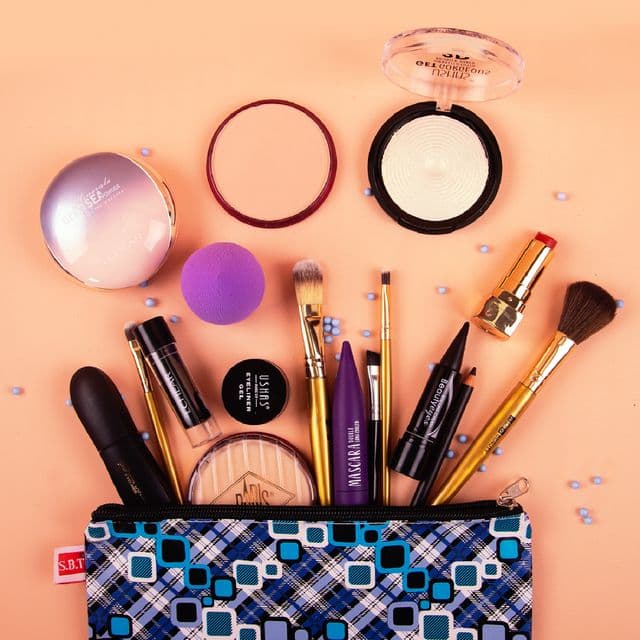
How to Choose Makeup Products for Your Skin Type
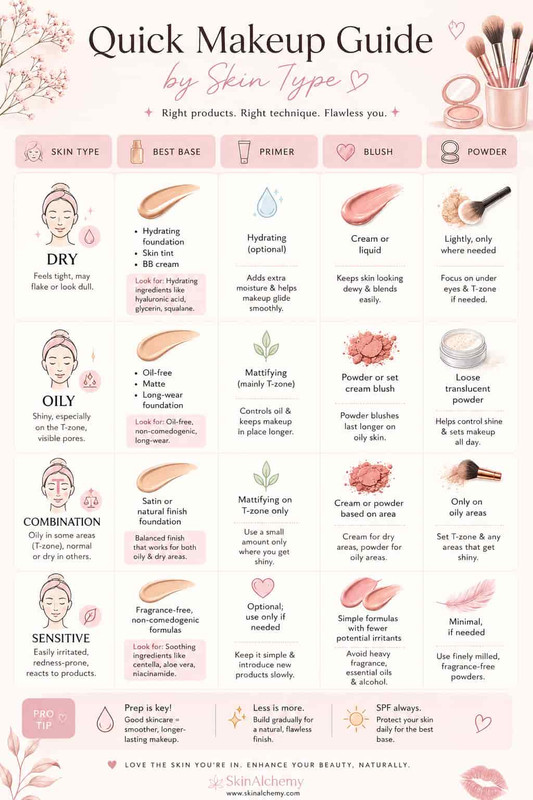
One thing many beginners overlook when choosing makeup is their own skin. Your skin type can help narrow your makeup choices, and by considering your skin’s specific needs, you can choose formulas that feel comfortable, look good, and wear well on your skin.
Makeup for Dry Skin
Look for comfortable, flexible formulas that won’t emphasize dry or flaky areas.
- Foundation: Hydrating, natural, satin, or dewy finishes. Skin tints and BB creams work well for lighter coverage.
- Concealer: Creamy, flexible formulas that don’t dry down too quickly.
- Blush: Cream, liquid, or stick formulas for a fresh, skin-like finish.
- Powder: Use lightly and only where you need extra setting.
Be cautious with: Very matte formulas if they make dry patches more noticeable.
Quick tip: If makeup catches on dry patches, don’t add more product. Moisturize well during skin prep, or use hydrating mist on the area and gently press with a damp sponge to help the makeup blend smoothly.
Makeup for Oily Skin
Focus on shine control and wear time without choosing formulas that feel too heavy or drying.
- Foundation: Lightweight, long-wearing, natural-matte, or soft-matte formulas.
- Concealer: Buildable formulas that cover without becoming cakey.
- Blush: Powder blush can be a practical choice for longer wear.
- Powder: Loose or pressed powder can help control shine, especially around the T-zone.
- Primer: Consider a mattifying or pore-blurring primer if makeup breaks down quickly.
Quick tip: You don’t need the most matte formula. If it feels dry or looks cakey, try a lighter soft-matte formula instead.
Makeup for Combination Skin
You don’t have to make your whole face matte or dewy. Choose your main base for the finish you like, then adjust specific areas.
- Foundation: Natural or satin finishes are a versatile starting point.
- Primer: Apply mattifying or pore-blurring primer only where you get oily or makeup breaks down.
- Powder: Set the T-zone or other shiny areas lightly and use less on drier areas.
- Blush: Cream for a fresh finish or powder when you want more staying power.
Quick tip: You usually don’t need separate foundations for different areas. Small adjustments with primer and powder are often enough.
Makeup for Sensitive Skin
If your skin reacts easily to makeup, prioritize formulas your skin already tolerates rather than relying on “sensitive skin” labels. Look for:
- Fragrance-free formulas if fragrance has irritated your skin before. Fragrance is a common cosmetic allergen linked to contact dermatitis.
- Familiar, simple formulas you’ve used without problems.
- Non-comedogenic options if you’re also prone to clogged pores.
Quick tip: Introduce one new product at a time. The American Academy of Dermatology recommends testing new cosmetics on a small area for 7–10 days before regular use.
Unsure about your skin type? Read our guide on Beginners Skincare Routine for All Skin Types to identify your Skin Type.
How to Test Makeup Like a Professional
Before you buy makeup, take a moment to see how a product looks, blends, and wears on your skin—and whether the shade actually suits you as a beginner. These simple checks are especially useful when you’re building your first makeup kit and still learning which formulas and shades work for you.
1. Foundation: Test the Shade Properly
- Swatch 2–3 close shades along your jawline, extending slightly toward your neck.
- Let them sit for 10–30 minutes before choosing
- Some formulas can oxidize and appear darker.
- Check the shades in natural daylight whenever possible.
- Apply a fresh swatch beside the dried one. The difference makes oxidation much easier to spot.
- Choose the foundation shade that blends most seamlessly into your jawline and neck—you shouldn’t see an obvious line between the foundation and your natural skin.
2. Concealer: Check the Shade & Texture
- For blemishes and redness: Choose a concealer that closely matches your foundation and natural skin tone so it blends seamlessly.
- For under-eyes: Choose a shade about ½–1 shade lighter than your skin tone if you want subtle brightening. Avoid going too light—it can make dark circles look grey or ashy.
- Blend a small amount and give it a minute to settle.
- Look for a formula that stays smooth and flexible rather than becoming dry, thick, or patchy.
Shopping hack: Blend a little between your thumb and index finger, then move your fingers. If it quickly settles into the creases, it may be too stiff for areas that move frequently.
3. Lipstick: Check the Shade
- If in-store hygiene rules don’t allow lip swatching, try the shade on your fingertip instead of the back of your hand.
- Your fingertips have more natural color and texture, giving you a closer approximation of how the shade may look on your lips.
- Choose a shade that works with your natural lip color and undertone, not just how it looks in the tube.
- For beginners, creamy or satin formulas are usually easier and more comfortable to wear. Matte formulas offer longer wear but can emphasize dry lips.
Quick test: Rub a little between your fingertips. A good everyday formula should feel smooth and comfortable—not overly waxy, gritty, or drying.
4. Blush: Use Your Natural Coloring
- Swatch blush on the fleshy area below your thumb (thenar eminence) and hold it beside your cheek.
- It can give you a better idea of whether the shade complements your natural coloring than testing it on the back of your hand.
- Choose the finish based on your skin and preference.
- Cream or liquid blush gives a fresh, skin-like finish, while powder is often easier to control and tends to last longer on oily skin.
- Start with a buildable shade. It’s easier to add more blush than to fix an overly strong application, especially when you’re still learning.
5. Highlighter: Check the Reflection
When you’re testing a highlighter, don’t just look at the shade in the packaging—check how it catches the light on your skin. Swipe a little along the outer edge of your hand and slowly move it under the light.
- Fine, smooth reflection: Gives a softer, more natural glow.
- Large shimmer particles: Creates a more obvious, glittery finish.
Beginner tip: If you want an everyday glow, look for a highlighter that reflects light smoothly rather than one with visible glitter particles.
6. Eyeshadow: Check How It Sets
For cream eyeshadows, apply a small swatch near a finger joint and bend your finger a few times.
- If it stays smooth and flexible, that’s a good sign for a formula that moves comfortably with your eyelids.
- If it quickly becomes stiff, patchy, or cracks, you may find it less comfortable to wear.
- For powder eyeshadows, gently blend the swatch with your finger to check pigment, blendability, and fallout before buying.
Beginner tip: If you’re new to eyeshadow, a buildable neutral palette is usually easier to work with than highly pigmented shades that are harder to control.
7. Mascara: Look Beyond the Formula
The mascara wand can make application easier—or more frustrating—depending on your lashes.
- Short lashes: Look for a smaller, more precise brush that can reach the roots without smudging.
- Sparse lashes: A volumizing formula can help create a fuller appearance.
- Straight lashes: Look for a formula that helps hold your curl.
- Lower lashes: A smaller wand can give you better control.
8. Powder: Check the Texture & Finish
Before buying powder, rub a small amount between your fingertips and look at how it sits on your skin.
- Smooth, finely milled texture: Usually feels lighter and is less likely to look heavy when applied.
- Chalky or gritty texture: May be more noticeable on the skin, especially if you apply too much.
- Pressed powder: Convenient for everyday use and touch-ups.
- Loose powder: Often useful when you want more oil control or setting power.
Beginner tip: Don’t choose powder simply because it feels silky in your hand. Check the finish on your skin too—especially whether it looks natural or emphasizes texture.
Common Makeup Shopping Mistakes Beginners Make
Buying your first makeup products can be exciting, but it’s easy for beginners to end up with products that don’t suit them—or simply don’t get used. Here are the mistakes worth avoiding when building your first kit.
1. Buying More Than You Need
You don’t need multiple foundations, blushes, or lip products while you’re still figuring out what works for you. Start with a few versatile products and add more when you have a reason to.
2. Buying Whatever Is Trending
A viral product isn’t automatically a good fit for you. Before buying, ask: Does the formula suit my skin, routine, and the finish I actually want?
3. Buying a Full Kit Without Checking the Shades
Pre-made kits can look convenient, but they may include shades you’ll rarely use. Choose individual products based on your skin tone, preferences, and actual routine rather than assuming a full makeup kit for beginners will work for everyone.
4. Ignoring Your Skin Type
A formula that looks beautiful on someone else may wear completely differently on your skin. Use your skin type as a starting point, then consider the coverage and finish you prefer.
5. Spending More Before Learning What You Need
Expensive makeup won’t fix a mismatched shade or a formula that doesn’t suit you. Learn what works for you first, then spend more selectively on products you actually use.
6. Shopping Online Without Checking the Details
When buying online, don’t rely only on the product photo or shade name. Check swatches, undertones, reviews, seller authenticity, product size, and the return/exchange policy before ordering. These are particularly important for complexion products, where lighting and shade representation can be misleading.
Final Thoughts
Makeup for beginners is really about learning what works for you—not following a fixed list of products or buying everything at once. Start with the products that genuinely fit your routine, learn how to use them well, and add more as your skills, preferences, and makeup needs evolve.
Read: Makeup guide for beginners (step-by-step)
FAQs
1. What makeup does a beginner need?
You don’t need a full makeup collection to get started. Concealer, mascara, blush, a lip product, and powder if needed are enough to create a simple, polished everyday look.
2. What should I buy as a makeup beginner?
Start by buying one product for each need, rather than several versions of the same thing. A practical first purchase could be one complexion product, mascara, blush, brow product, and an everyday lip product.
3. What makeup should beginners start with?
Start with the easiest products to apply and learn first, rather than jumping into advanced makeup. Master your base, blush, mascara, brows, and lips before adding products like eyeliner, contour, or false lashes.
4. What makeup items are best for beginners?
The best beginner makeup products are versatile, easy to apply, and suited to your skin and routine. Start with simple formulas before experimenting with more advanced products.
5. How many makeup products does a beginner actually need?
You can create a simple everyday look with 4–6 versatile products: concealer, mascara, blush, a lip product, and powder if needed. Add a brow product or base product if you need more definition or coverage.
6. Can beginners skip foundation?
Absolutely. If you only need coverage in a few areas, you can use concealer where needed and let the rest of your skin show through for a lighter, more natural-looking finish.
Found this article helpful? Share it with someone you care about.
Stay radiant! Catch you in the next article.
Read More

What Does Hyaluronic Acid Do for Your Skin? A Science-Backed Guide to Hyaluronic Acid Benefits & Uses
A science-backed guide to what does hyaluronic acid do for your skin, its research-backed benefits,…
Is Glycerin Good for Skin? A Science-Backed Guide to Benefits, Uses & Side Effects
A science-backed guide answering “Is glycerin good for skin?” Explore glycerin benefits for skin, how…
Fall Makeup 2026: Trends, Colors & Easy Looks to Try
The fall makeup guide explores the latest 2026 trends, flattering autumn colors, and easy step-by-step…
Fall Skincare Routine for Glowing Skin: How to Keep Your Skin Hydrated
A practical fall skincare routine guide to building a routine for glowing skin, covering how…
How to Clean Makeup Brushes and Sponges: A Complete Guide 2026
A practical beginner’s guide to ‘how to clean makeup brushes and sponges,’ covering the right…
Why Does My Makeup Look Cakey, Patchy, Dry, or Separated? Here’s How To Avoid Cakey Makeup and Make Foundation Look Smooth
A complete makeup guide to ‘why does my makeup look cakey, ‘ breaking down common causes…
Explore Our Categories
Skincare Insights
Discover the science behind healthy skin with science-backed insights on skincare ingredients, routines, and skin health.
Beauty Inside-out
.png)
Understand how nutrition, lifestyle, and wellness support healthy skin, stronger hair, and beauty from within.
Makeup Guide
Practical makeup guidance to help you choose products, improve application, and use cosmetics safely with confidence.

Pingback: How To Apply Makeup Step-By-Step For Beginners| Beginner Makeup Guide 2026
Pingback: Why Does My Makeup Look Cakey? The Complete Guide To Smooth, Flawless Foundation
Pingback: How To Clean Makeup Brushes And Sponges: A Complete Guide 2026